
SenTec

SOX500 Zirconia Oxygen Analyzer

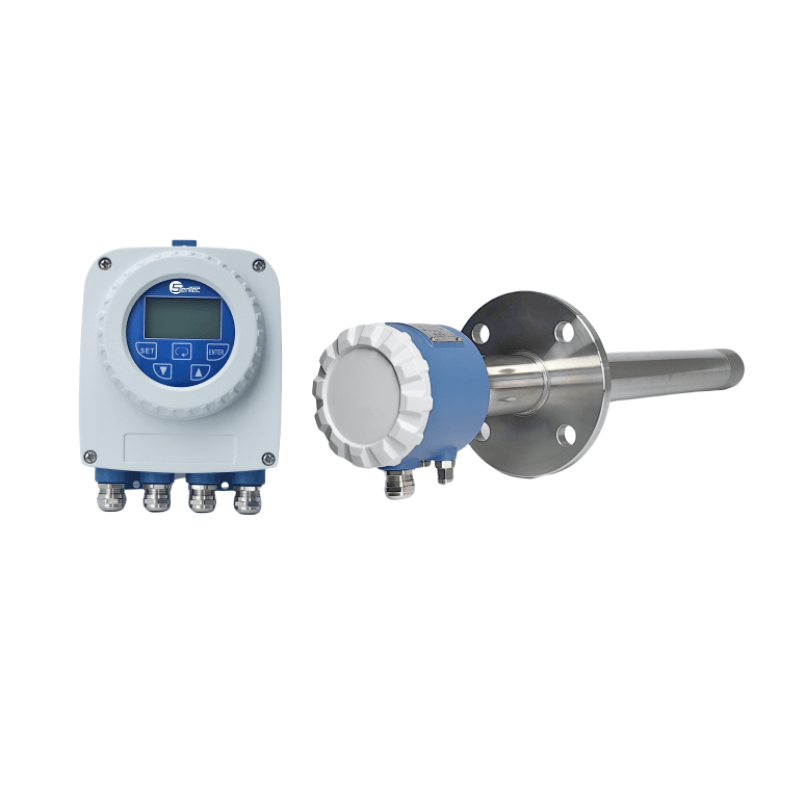
SOX500 zirconia oxygen analyzer consists of a detection unit (oxygen probe) and a control unit (transmitter). The detection unit is installed in the flue. The detector consists of a dust shield, zirconia tube, heating furnace, thermocouple, gas conduit, junction box, and housing. The entire device utilizes a fully enclosed structure to enhance sealing and extend its service life. The control unit is the user’s terminal for integrated operation and includes an operation panel, display interface, and a 4-20mA current output port. Oxygen analyzers with automatic calibration also include an automatic calibration unit box. Purge units with purge function include a purge solenoid valve.

Category

SOX500 zirconia oxygen analyzer consists of a detection unit (oxygen probe) and a control unit (transmitter). The detection unit is installed in the flue. The detector consists of a dust shield, zirconia tube, heating furnace, thermocouple, gas conduit, junction box, and housing. The entire device utilizes a fully enclosed structure to enhance sealing and extend its service life. The control unit is the user’s terminal for integrated operation and includes an operation panel, display interface, and a 4-20mA current output port. Oxygen analyzers with automatic calibration also include an automatic calibration unit box. Purge units with purge function include a purge solenoid valve.

Zirconia oxygen analyzers are used to monitor and control oxygen concentrations in combustion gases, boilers, and industrial furnaces.

They are widely used in coal-fired power plants, gas-fired boilers, waste incineration boilers, hazardous waste disposal incinerators, cracking furnaces in petrochemical plants, blast furnace hot air furnaces, oxygen enrichment pipes, sintering furnaces, heating furnaces, and heat treatment furnaces in the metallurgical industry, cement kilns and glass kilns in the building materials industry, inert gas shielded furnaces in the semiconductor industry, and electrode material production furnaces in the lithium battery industry. They help conserve energy and, by controlling complete combustion, reduce CO2, SOx, and NOx emissions, contributing to protecting the global environment and preventing global warming and air pollution.
Parameters

Oxygen transmitter parameter requirements

Display: LCD with Chinese menu. Sensor-activated buttons for direct operation on the glass panel without opening the cover.

Display: Oxygen concentration, tube temperature, tube voltage, output current, sensor internal resistance, self-diagnostic information, etc.

Operational Language: Chinese (English optional)

Power Supply: 220VAC ±10%

Power Frequency: 50/60Hz

Heating Power: ≤150W

Measurement Range: 0.01%-25.00% (adjustable from 5.00% to 25%)

Output Signal: 4-20mA

Signal Interface: Supports RS485/MODBUS protocols

Bluetooth Port: Expandable Bluetooth functionality available in the menu

Damping Adjustment: Adjustable damping coefficient in the menu

Measurement Accuracy: ±1% of range or ±0.1% of reading (O2)

Constant Temperature: 700.0°C ±0.2°C (adjustable from 500°C to 900°C) Protection Rating: IP66

Calibration Mode: Manual calibration/fully automatic calibration, selectable via the menu (automatic calibration requires an automatic calibration unit).

Data Retention: Output hold function during calibration.

Auto Purge: An automatic purge function is available in the menu to automatically purge dust from the filter at regular intervals.

Mounting Method: Wall-mounted.

Span Drift: Drift should not exceed 0.2% of the adjusted span over a 12-month period.

Stability: ≤±0.05% (instrument under 4-hour continuous calibration).

Self-Diagnostics and Alarms: Self-diagnostics are available, including thermocouple reverse connection, thermocouple burnout, heating anomalies, oxygen concentration alarm, and temperature alarm.

Response Time: 90% response within 0.5 seconds (measured from the moment gas enters the calibration gas inlet and the analog signal begins to change).

Oxygen Transmitter Service Life: ≥5 years

Probe technical parameter requirements

Flue gas temperature: ≤800°C (customizable for high-temperature flue gas)

Flue gas pressure: -10 to +50 kPa

Flue gas velocity: 0 to 50 m/s

Ambient temperature: -40 to +80°C

Zirconium cell resolution: <1 ppm

Insertion depth: 150-2000 mm (customizable upon request)

Material: 304, 316L, 310S, HC (optional)

Protection tube diameter: φ45 mm (default), φ32 mm, φ38 mm, φ51 mm

Probe mounting angle: horizontal or vertical downward

Flange: JIS-5K-65-FF (standard), customizable (DN50/DN65/DN80/DN100)

Heat-up time: 5 to 15 minutes (constant temperature 700°C).

Sensor electrode: Platinum. Pressure Resistance: No leakage during normal operation under any flue gas pressure under combustion control conditions (the sensor is factory-tested at 400 kPa with zero leakage).

Sensor Zero Potential: Less than ±0.5 mV (in air, at a constant temperature of 700°C). (Long-term stability without drift).

Sensor Internal Resistance: Less than ±20 ohms (in air, at a constant temperature of 700°C).

Calibration Gas: 5% and 20.6% O2, with nitrogen as the background gas (calibration is possible with any gas between 1% and 10%, with linearity less than 0.01% across the full range).

Reference Gas: Air, no external reference gas source required.

Probe Filter: Standard dust-proof precision filter.

Service Life: ≥4

Documents

Take the next step

Get a Quote

Request a quote from us based on your specific requirements

To be a Distributor

If you want to distribute sentec brand in your local area, you can contact us for more.

Installation & Maintain

A group of  professional engineer is here to help your sensor installation & maintenance.