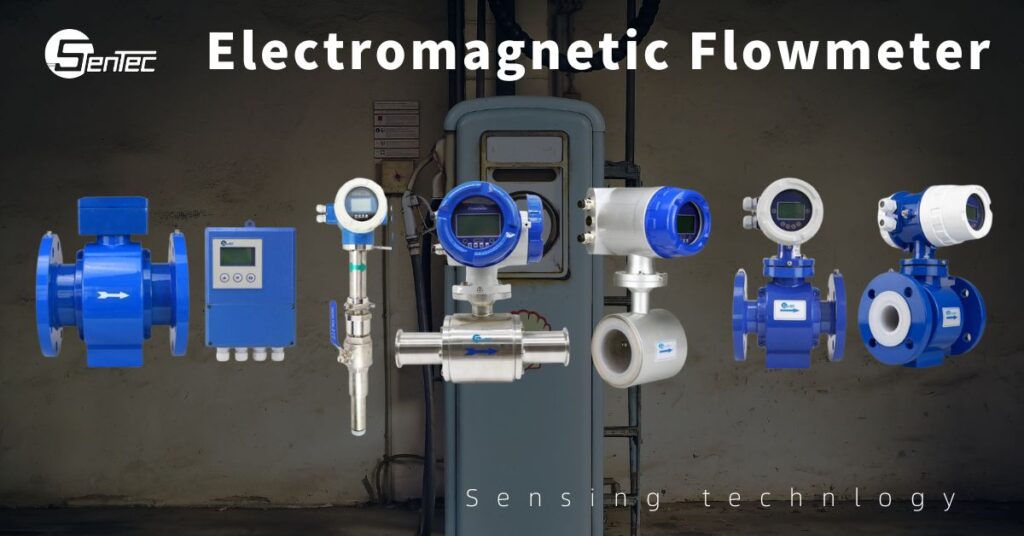
Because electromagnetic flow meters have no throttling components and are suitable for conductive liquids with conductivity ≥ 5 μS/cm (some advanced models can extend to 0.01–5 μS/cm, usually requiring inert electrodes such as platinum-iridium alloy or Hastelloy C, and low-adsorption linings such as PTFE or PFA to reduce interference with conductivity signals), they possess key advantages such as wear resistance and acid-alkali corrosion resistance.
They have become mainstream flow measurement instruments in fields such as municipal water supply and drainage, industrial wastewater, chemical acid/alkali transport, metallurgical slurry, food and beverage (hygienic grade), and pharmaceutical slurries, accounting for 15%–20% of the global flow measurement market.
The core of product selection lies in the matching of lining and electrode materials, based on the medium characteristics (corrosiveness, abrasiveness, temperature/pressure), balancing measurement accuracy, service life, and cost-effectiveness.
This document forms a systematic and precise selection scheme by optimizing selection logic and adding typical application scenarios, providing a practical configuration reference for various working conditions.
Core Principles of Accurate Selection
Selecting an electromagnetic flow meter is not a single-parameter match but a three-dimensional decision process based on “medium characteristics – operating conditions – usage requirements.”
Improper selection may lead to measurement errors exceeding ±5%, lining corrosion/wear leakage, or electrode failure, increasing maintenance costs (annual replacement expenses may reach 30% of the original equipment value) and possibly causing production interruptions (e.g., chemical process shutdowns).
This article uses a method of “starting from medium characteristics analysis, focusing on lining-electrode matching, and ensuring full-condition verification” to optimize the selection process, while adding selection details for hygienic applications (food and pharmaceuticals), covering both industrial and civil needs.
Steps for Accurate Selection
Step 1: In-depth Analysis of Medium Characteristics (Foundation of Selection)
Collect all key parameters of the medium to avoid selection bias due to missing information. Pay attention to:
- Chemical composition and concentration: Identify main components (e.g., hydrochloric acid, sodium hydroxide) and impurities (e.g., fluoride or chloride ions).
Example: If industrial HCl contains >0.5% fluoride ions, electrode corrosion resistance must be specially considered. - Acidity/alkalinity (pH):
Classified as strong acid (pH < 2), weak acid (2 ≤ pH < 6), neutral (6 ≤ pH ≤ 8), weak alkali (8 < pH ≤ 12), strong alkali (pH > 12); this directly affects lining and electrode material choices. - Conductivity:
Must be ≥ 5 μS/cm. Below this value, the electromagnetic induction signal becomes too weak for valid measurement.
Typical examples: tap water (50–500 μS/cm), hydrochloric acid (>1000 μS/cm), purified water (<1 μS/cm, unsuitable). - Solid particle properties:
Record particle size (e.g., slurry with ≥1 mm particles requires high wear-resistant lining), volume fraction (>10% requires consideration of flow rate impact on wear), and hardness (quartz sand requires ceramic lining). - Temperature range:
Include both “normal operating temperature” and “extreme temperature” (e.g., summer pipe exposure may exceed normal by 10–20°C). - Pressure range:
Distinguish positive pressure (e.g., 0.6–2.5 MPa in chemical pipelines) from negative pressure (e.g., –0.05 MPa in vacuum distillation systems) to prevent lining deformation. - Flow velocity range:
Recommended normal velocity 1–3 m/s (below 0.5 m/s may cause scaling, above 5 m/s increases wear).
Step 2: Precise Selection of Lining Material
(Prioritize corrosion resistance and temperature compatibility)
The lining must meet both medium corrosion resistance and temperature/pressure compatibility.
Selection priority: corrosiveness > temperature > wear resistance > pressure.
Specific standards are defined accordingly.
| Selection Dimension | Medium / Operating Condition Characteristics | Recommended Materials | Not Recommended Materials | Remarks |
|---|---|---|---|---|
| Corrosion Resistance | Strong Corrosion (98% Sulfuric Acid, 30% Hydrochloric Acid) | PTFE, PFA | Rubber, Common Plastics | PFA offers slightly better corrosion resistance than PTFE, but is more expensive. |
| Moderate Corrosion (10% Sodium Hydroxide, Weak Acids) | FEP, Nitrile Rubber | Neoprene Rubber | FEP can withstand some organic solvents. | |
| Weak Corrosion / Neutral (Tap Water, Cooling Water) | Neoprene Rubber, Nitrile Rubber | PTFE | Rubber materials offer the best cost-performance. | |
| Wear Resistance | High Abrasion/Wear (Slurry, Mortar, Quartz Sand Slurry) | Polyurethane (neutral media), Ceramic | Rubber, PTFE | Ceramic materials are wear-resistant but brittle; avoid impact. |
| Moderate Abrasion/Wear (Industrial Wastewater, Contains Minor Sediment) | Wear-Resistant Nitrile Rubber | Standard Neoprene Rubber | Regular inspection of lining thickness is required. | |
| Temperature Adaptability | High Temperature (>120°C, e.g., Saturated Steam Condensate) | PFA, Ceramic | Rubber | Ceramic can withstand up to 400°C. |
| Normal Temperature (5-80°C, e.g., Tap Water) | Neoprene Rubber, Nitrile Rubber | Ceramic | Rubber materials tolerate temperature fluctuations ≤ ±20°C. | |
| Low Temperature (<5°C, e.g., Refrigerated Brine) | PTFE, FEP | Rubber | Confirm the material’s low-temperature toughness. | |
| Pressure Adaptability | High Pressure (>2.5 MPa, e.g., High-Pressure Water Pipes) | Ceramic, Metal Composite Materials | PTFE | Ceramic requires matching high-strength flanges. |
| Negative Pressure / Vacuum (<-0.02 MPa, e.g., Vacuum Systems) | PFA, Nitrile Rubber | PTFE | Lining should be thickened for negative pressure conditions. |
Step 3: Coordinated Selection of Electrode Material
(Matching both lining and medium)
Electrodes must not chemically react with the medium and must match the thermal expansion characteristics of the lining.
| Medium Type | Typical Medium Examples | Recommended Electrode Materials | Compatible Lining Materials | Remarks |
|---|---|---|---|---|
| Oxidizing Acids | 65% Nitric Acid, Mixed Acid (Nitric + Sulfuric) | Hastelloy C, Titanium Electrode | PTFE, PFA | Hastelloy C offers better oxidation resistance than Titanium. |
| Reducing Acids | 30% Hydrochloric Acid, Dilute Sulfuric Acid (<50%) | Hastelloy B, Tantalum Electrode | FEP, PTFE | Tantalum electrode resists hydrochloric acid but not hydrofluoric acid. |
| Alkaline Solutions | 20% Sodium Hydroxide, Potassium Hydroxide Solution | Hastelloy C, 316L Stainless Steel (for low concentration <10%) | FEP, Rubber | High concentration alkalis (>30%) require Hastelloy C. |
| Salt Solutions | Sodium Chloride Solution, Calcium Chloride Solution | Titanium Electrode, Hastelloy C | FEP, PTFE | 316L Stainless Steel is prone to pitting corrosion at high concentrations; Titanium electrode is preferred for seawater measurement. |
| High-Abrasion Slurries | Mineral Slurry, Mortar, Coal Slurry | Hard Alloy (Tungsten Carbide), Ceramic-Coated Electrode | Polyurethane, Ceramic Lining | Hard alloy electrodes require avoidance of empty pipe operation. |
| Sanitary/Hygienic Requirements | Fruit Juice, Milk, Pharmaceutical Liquids | Polished 316L (Ra ≤ 0.8μm), Hastelloy C (Food Grade) | Food Grade PTFE, FEP | Must comply with FDA, 3A, and other sanitary standards. |
| High-Precision Measurement | Metering Calibration, Laboratory Fluids | Platinum-Iridium Alloy (Accuracy ±0.1%) | PTFE | Higher cost, used only for critical measurement points. |
| Low Conductivity Measurement | Applicable range 0.05 μS/cm to 5 μS/cm | Platinum-Iridium Alloy, Hastelloy C | Low-adsorption linings like PTFE, PFA | Medium conductivity is affected by temperature changes. |
Step 4: Verification Under Full Operating Conditions
(To avoid selection risk)
After preliminary selection, perform the following four verifications:
- Material compatibility verification:
Consult Corrosion Data Handbook and Chemical Equipment Material Selection Manual to confirm lining/electrode corrosion rate ≤ 0.1 mm/year under actual concentration and temperature. - Temperature-pressure coupling verification:
Refer to the lining/electrode’s temperature-pressure rating curve.
Example: PTFE lining’s maximum allowable pressure is 1.0 MPa at 120°C; exceeding it may cause bulging. - Special condition verification:
- Under negative pressure: test lining sealing (PFA lining leakage ≤ 1×10⁻⁵ Pa·m³/s).
- Under rapid temperature changes (e.g., ±30°C/h): verify thermal expansion coefficient compatibility.
- Manufacturer technical confirmation:
Provide complete medium and operating data, and request the manufacturer to issue a Selection Compatibility Report.
When necessary, perform immersion testing (e.g., soak electrode in medium for 72 hours—no corrosion permitted).
Typical Special Medium Selection Schemes
Hot Water (Industrial/Civil)
- Medium features: 50–150°C; may contain chloride ions (e.g., boiler feedwater) or dissolved oxygen (e.g., heating water); pressure 0.6–1.6 MPa.
- Lining: 50–90°C use chloroprene rubber (low cost); 90–130°C use PTFE; 130–150°C use PFA or ceramic.
- Electrode:
- Ordinary hot water → 316L
- With Cl⁻ >100 mg/L → Hastelloy C
- High temp/pressure (150°C, 1.6 MPa) → Titanium
- Installation notes:
- Electrodes should not be at the pipe top (avoid bubble adhesion).
- Insulate piping to reduce temperature fluctuations.
Food and Beverage (Hygienic Applications: e.g., Juice, Milk)
- Medium features: High hygiene (no dead corners, easy cleaning), weak corrosion (juice pH 3–4), temperature 5–60°C.
- Lining: Food-grade PTFE (FDA 1 CFR Part 177 compliant), seamless design to avoid residue.
- Electrode: Polished 316L (Ra ≤ 0.4 μm); Hastelloy C if sulfur compounds present.
- Installation notes: Use quick-clamp flanges for easy disassembly and cleaning; avoid pipe angles >90°.
Pharmaceutical Slurries (e.g., Herbal Extracts, Vaccines)
- Medium features: Sterile requirement (steam sterilization), weak alkali (pH 8–9), temperature 30–160°C (sterilization temperature).
- Lining: High-temperature food-grade PFA (withstands 160°C steam sterilization).
- Electrode: Polished Hastelloy C (corrosion-resistant and sterilizable).
- Installation notes: Use sanitary flanges (silicone seals compliant with USP Class VI); perform regular integrity testing.
Typical Application Configuration Reference Table
| Medium Type | Temperature Range | Pressure Range | Lining Selection | Electrode Selection | Special Considerations |
|---|---|---|---|---|---|
| Municipal Tap Water | 5-40°C | 0.3-0.6 MPa | Neoprene / Nitrile Rubber | 316L Stainless Steel | Avoid pipeline vibration (affects signal stability); clean filters regularly |
| Industrial Cooling Circulating Water | 10-50°C | 0.6-1.0 MPa | Nitrile Rubber | 316L Stainless Steel | Monitor water hardness (prevents scale buildup on electrodes) |
| 30% Hydrochloric Acid Solution (Chemical) | 5-80°C | 0.6-1.6 MPa | PTFE / PFA | Hastelloy B / Tantalum | Do not use 316L electrodes (prone to corrosion); PTFE gasket material required |
| 20% Sodium Chloride Solution (Chemical) | 5-100°C | 0.6-1.2 MPa | FEP / PTFE | Hastelloy C / 316L (<10% concentration) | Use Hastelloy C for high concentration (>30%); avoid sudden temperature drops |
| Neutral Slurry (Metallurgical) | 10-80°C | 0.8-2.0 MPa | Polyurethane Lining | Hard Alloy (Tungsten Carbide) | Maintain flow velocity 1.5-2.5 m/s (prevents particle settlement); vertical installation recommended |
| Acidic Slurry (Copper Leach Solution) | 15-90°C | 0.8-1.6 MPa | Ceramic Lining | Tantalum Electrode | Monitor pH in real-time (enhance corrosion inspection when pH < 2) |
| Municipal Sewage | 5-60°C | 0.3-0.8 MPa | Wear-Resistant Nitrile Rubber | Hastelloy C | Pre-treatment to remove large particles (>5mm); clean electrode fouling regularly |
| Industrial Organic Wastewater (contains Ethanol) | 10-70°C | 0.6-1.0 MPa | FEP / PTFE | Hastelloy C | Confirm lining resistance to organic solvents; Explosion-proof meter required (Ethanol is flammable) |
| Apple Juice (Food) | 5-30°C | 0.3-0.5 MPa | Food-Grade PTFE | Polished 316L (Ra ≤ 0.4μm) | Must comply with FDA standards; clean with 80°C hot water |
| Traditional Chinese Medicine Extract (Pharmaceutical) | 30-100°C | 0.5-1.0 MPa | Food-Grade PFA | Polished Hastelloy C | Withstands 121°C steam sterilization; avoid contact with metal ions |
| High-Temperature Hot Water (Boiler Feed Water) | 100-150°C | 1.2-2.5 MPa | PFA / Ceramic Lining | Titanium Electrode | Insulation measures required (to prevent heat loss); grounding resistance < 10 Ω |
| Refrigerated Brine (Calcium Fluoride Solution) | -20-5°C | 0.8-1.5 MPa | PTFE / FEP | Titanium Electrode | Confirm lining has low-temperature toughness; avoid empty pipe operation (prevents freezing) |
Common Selection Errors and Avoidance Strategies
| Common Error Type | Error Manifestation & Consequences | Reminder Strategy | Actual Case Reference |
|---|---|---|---|
| Neglecting Trace Impurities in Medium | A chemical plant measured hydrochloric acid, ignoring 0.3% fluoride ions, causing tantalum electrode failure within one month. | Require complete component report (including impurities) from the medium supplier; prioritize materials resistant to impurities. | After correction, switched to Hastelloy electrode, extending service life to over 2 years. |
| Insufficient Consideration of Temperature & Pressure | A heating system selected neoprene lining (temp resistance ≤80°C), winter water temperature reached 95°C causing lining blistering, aging, and leakage. | Select based on “extreme temperature +10°C” & “extreme pressure +20%”; refer to the lining material’s “temperature-pressure curve”. | After replacing with PTFE lining, no further aging issues occurred. |
| Underestimating Abrasion/Wear | A mining plant selected standard nitrile rubber lining; quartz sand in the slurry caused the lining to wear through in 3 months. | Calculate wear amount based on “particle hardness × content × flow velocity”; select ceramic or polyurethane lining for high-wear conditions. | After switching to polyurethane lining, service life extended to 1 year. |
| Cost-Priority Misconception | A municipal sewage plant selected an economical rubber lining; wear from sediment required replacement every 6 months, annual maintenance cost exceeded the original equipment value. | Calculate lifecycle cost (initial cost + 5-year maintenance cost); prioritize durable materials for high-wear/corrosion conditions. | After switching to wear-resistant nitrile rubber, annual maintenance costs decreased by 60%. |
| Omission of Hygienic/Sanitary Requirements | A dairy plant selected standard PTFE lining; material accumulation at the seam caused product contamination. | For hygienic applications, select seamless lining + polished electrodes; ensure compliance with 3A/FDA standards. | After correction, passed food hygiene certification. |
Post-Selection Maintenance and Optimization
Proper maintenance after accurate selection can extend equipment life by 30–50%:
- Regular inspection: Every 3–6 months, check lining wear (ultrasonic thickness gauge) and electrode cleanliness (no scaling or corrosion).
- Calibration interval: Once per year for general use; every 6 months for trade metering points.
- Troubleshooting: For unstable readings, check grounding (<10 Ω) and inspect for bubbles or deposits.
- Spare parts: For corrosive or abrasive media, keep 1–2 spare linings and electrodes to minimize downtime.
Summary
Accurate selection of electromagnetic flow meters should focus on medium characteristics and be verified under full operating conditions, prioritizing corrosion and temperature compatibility, then balancing wear resistance and cost.
The optimized selection process and expanded configuration references in this document cover the needs of municipal, chemical, metallurgical, food, and pharmaceutical industries.
In actual selection, it is recommended to work closely with the manufacturer’s technical team, providing medium samples and complete condition parameters. Perform on-site simulation tests when necessary to ensure the selection meets both technical and economic requirements.
Proper selection ensures measurement accuracy (±0.5%–±1.0%), reduces life-cycle cost, and supports production safety and efficiency.
Contact us to discuss your process requirements or share your application details — our experts can provide a precise selection proposal and technical support to help you achieve optimal performance and cost efficiency.