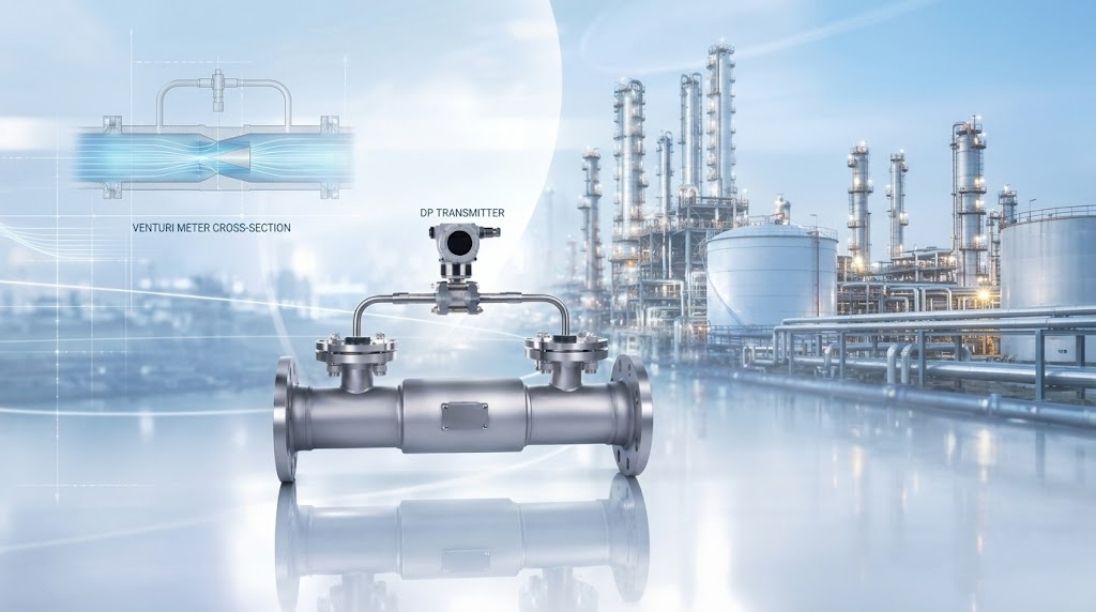
Wireless pressure transmitter using 4G and NB-IoT networks signal technology can operate on a single battery for up to many years while it maintains network availability of 99.999 percent. This capability makes these IoT solutions critical for remote monitoring of pressure data in a variety of industries. NB-IoT stands for narrowband IoT, a low-power wide-area network technology that can transmit data even from underground or indoor locations. When comparing 4G vs NB-IoT wireless pressure transmitter options, each offers distinct advantages for different applications.
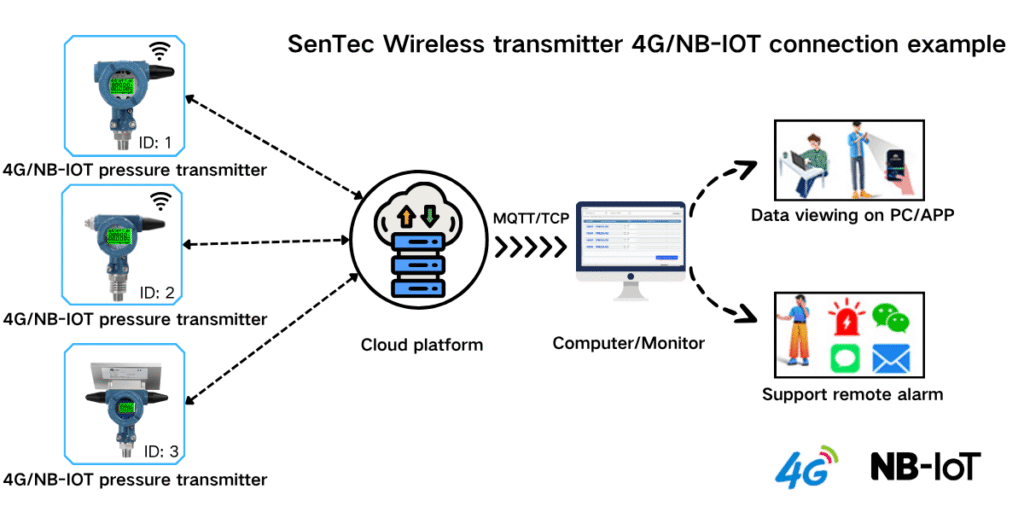
This piece will show you how to connect both 4G wireless pressure transmitter and NB-IoT wireless pressure transmitter systems to cloud platforms using MQTT and TCP protocols. You’ll also learn to configure smart technology for reliable remote monitoring.
Understanding Wireless Pressure Transmitters and Network Requirements
What Are Wireless Pressure Transmitters
A wireless pressure transmitter measures pressure and converts these readings into electrical signals that transmit wirelessly to receiving devices like control systems or monitoring stations. Traditional wired sensors rely on 4-20mA current signals and switching power supplies. These battery-powered devices use 3.6V lithium battery power supply and eliminate cabling requirements.
The core components include a sensing element (piezoelectric or capacitive sensors), signal conditioning circuits that amplify and filter the raw signal, wireless communication modules, and power supplies. These transmitters support gage pressure measurement and absolute pressure measurement. This makes them suitable for gasses and liquids compatible with stainless steel materials.
Industrial Applications and Use Cases
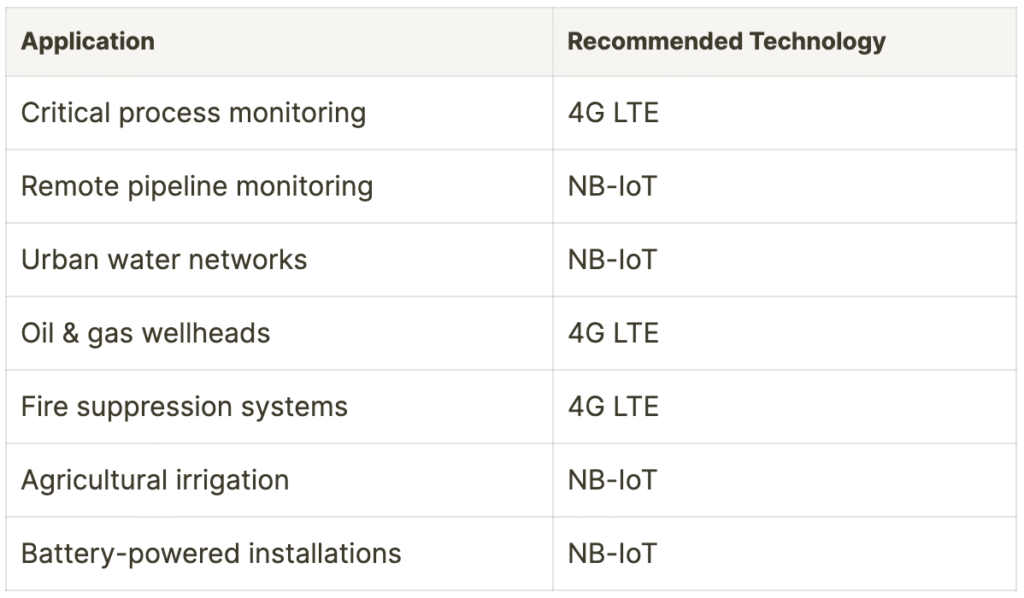
Wireless pressure transmitter solutions serve multiple sectors where wiring proves difficult or expensive. Oil and gas operations use these devices for wellhead pressure monitoring and pipeline integrity tracking. Water treatment facilities deploy them in pump stations and distribution networks for leak detection. Manufacturing plants rely on wireless transmitters to maintain process pressure in production lines. HVAC systems use them for chiller and boiler monitoring.
Key Technical Specifications for Remote Monitoring
Measurement accuracy reaches up to 0.1% for advanced models. Some industrial units offer ±0.075% of calibrated span. Pressure ranges vary from 29 PSI to 10,000 PSI depending on the application requirements.
They can be equipped with either disposable batteries or solar panels and rechargeable solar batteries. Battery life spans 3-10 years based on data transmission frequency and environmental conditions. Operating temperature ranges extend from -40°C to 85°C. Update rates are user-selectable from one second to 60 minutes, with one minute being the default setting.
4G vs NB-IoT: Choosing the Right Network for Pressure Transmitters
4G Wireless Pressure Transmitter Connection Characteristics
Standard 4G LTE networks deliver peak throughput of 150 Mbps downlink and 50 Mbps uplink for Cat 4 modules commonly used in M2M applications. A 4G wireless pressure transmitter communicates directly to the cellular network without requiring a gateway. The technology supports smooth handover between cell towers and works well for mobile equipment and applications requiring near immediate updates.
Latency ranges from 50 to 100 milliseconds in typical field conditions. Critical pressure spikes will reach cloud servers with minimal delay. Data rates typically range from 1 Mbps up to 100 Mbps and support immediate analytics and complex IoT applications.
NB-IoT Wireless Pressure Transmitter Connection Benefits
NB-IoT operates in a narrow 200 kHz bandwidth and excels in deep indoor coverage. The maximum coupling loss reaches 164 dB and provides 20 dB coverage improvement over legacy LTE systems. This superior penetration proves essential for monitoring pressure in underground vaults or inside concrete enclosures.
Peak data rates reach 26 Kbps downlink and 66 Kbps uplink, sufficient for small telemetry packets. Devices connect directly to existing cellular base stations and leverage infrastructure already deployed by mobile operators.
Power Consumption and Battery Life Comparison
Both technologies support Power Saving Mode (PSM) and Extended Discontinuous Reception (eDRX) to extend battery life. NB-IoT devices can operate for over 10 years with optimized duty cycles. Battery packs in 4G transmitters operate sensors and radios for years depending on update rates.
Data Rate and Latency Differences
NB-IoT latency typically measures 1 to 10 seconds in normal coverage and increases to several seconds in extended coverage areas. This makes it less suitable for time-sensitive applications.
Coverage and Signal Penetration Analysis
NB-IoT demonstrates superior signal penetration through multiple layers of brick or metal walls. Therefore, it performs well in basements and remote locations where standard cellular signals struggle.
4G vs NB-IoT comparision
4G LTE Advantages: NB-IoT Advantages:
- High data rate: 10-50 Mbps download
- Low latency: 50-100ms
- Wide coverage: Existing infrastructure
- Real-time monitoring: Suitable for critical applications
- Rich data transmission: Can send images, videos, complex data
- Ultra-low power consumption: Battery life up to 10 years
- Deep penetration: Works in basements, underground, remote areas
- Low cost: Cheaper modules and data plans
- Massive connectivity: Supports 50,000+ devices per cell
- Optimized for IoT: Small, periodic data packets
4G & NB-IoT wireless monitoring System Architecture
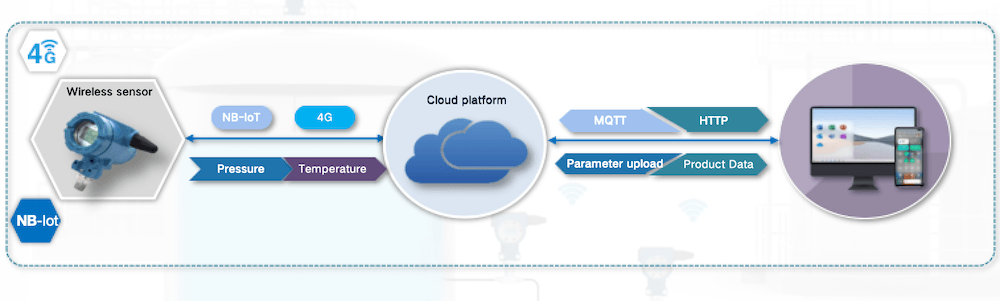
┌─────────────────────────────────────────────────────────────┐
│                    FIELD LAYER
│  ┌──────────────────────────────────────────────────────┐
│  │  Pressure Transmitter
│  │  ├─ Pressure Sensor (Piezoresistive/Capacitive)
│  │  ├─ Signal Processing Unit
│  │  ├─ 4G/NB-IoT Module (SIM7000/SIM7070/BC95)
│  │  ├─ Power Management (Battery/Solar)
│  │  └─ Local Storage (Optional)
│  └─────────────────────────────────────────┘
───────────────────┘
                            ↓
                    4G/NB-IoT Network
                            ↓
┌─────────────────────────────────────────────────────────────┐
│                   NETWORK LAYER
│  ├─ Cellular Base Station
│  ├─ Mobile Network Operator
│  └─ IoT Platform Gateway
└─────────────────────────────────────────────────────────────┘
                            ↓
┌─────────────────────────────────────────────────────────────┐
│                   CLOUD PLATFORM
│  ├─ Data Reception & Storage
│  ├─ Real-time Processing & Analytics
│  ├─ Alert & Notification Engine
│  ├─ Historical Data Management
│  └─ API Services
└─────────────────────────────────────────────────────────────┘
                            ↓
┌─────────────────────────────────────────────────────────────┐
│                 APPLICATION LAYER
│  ├─ Web Dashboard
│  ├─ Mobile Applications (iOS/Android)
│  ├─ SMS/Email Alerts
│  └─ Third-party Integrations (SCADA, ERP)
└─────────────────────────────────────────────────────────────┘
Hardware Specifications
Typical Wireless Pressure Transmitter Specs:
Pressure Measurement:
- Range: -100 kPa to 100 MPa (customizable)
- Accuracy: ±0.1% to ±0.5% FS
- Sensor types: Piezoresistive, capacitive, strain gauge
- Process connections: M20×1.5, 1/2 NPT, G1/4, etc.
- Wetted materials: 316L stainless steel, Hastelloy
Communication:
- 4G: LTE Cat-1/Cat-4 (FDD/TDD)
- NB-IoT: 3GPP Release 13/14
- Frequency bands: 700/800/900/1800/2100/2600 MHz
- Protocols: MQTT, CoAP, HTTP/HTTPS, TCP/UDP
- Transmission distance: Unlimited (cellular coverage)
Power Supply:
- Battery: 3.6V lithium (19 Ah typical)
- Battery life: 2-10 years (depending on reporting frequency)
- Solar option: 5W panel + rechargeable battery
- Power consumption: <0.03 mA standby, 100-200 mA active
Environmental:
- Operating temperature: -40°C to +85°C
- Storage temperature: -50°C to +90°C
- Protection rating: IP65/IP67/IP68
- Explosion-proof: ATEX, IECEx (optional)
- Display: LCD with backlight (optional)
Data Transmission Protocols
MQTT (Recommended for Most Applications)
{
  "device_id": "PT-001-4G",
  "timestamp": "2026-04-02T14:30:00Z",
  "location": {
    "latitude": 40.7128,
    "longitude": -74.0060
  },
  "measurements": {
    "pressure": {
      "value": 125.5,
      "unit": "kPa"
    },
    "temperature": {
      "value": 23.5,
      "unit": "°C"
    },
    "battery": {
      "voltage": 3.5,
      "percentage": 85
    }
  },
  "status": {
    "signal_strength": -75,
    "alarm": false
  }
}
CoAP (Optimized for NB-IoT)
- Lightweight protocol
- UDP-based (lower overhead)
- Ideal for constrained devices
- Supports confirmable/non-confirmable messages
HTTP/HTTPS
- Simple implementation
- Wide compatibility
- Higher power consumption
- Good for 4G devices
Cloud Platform Features
Essential Features:
- Real-time Monitoring Dashboard
- Live pressure readings
- Trend graphs and charts
- Multi-device view
- Geographic mapping
- Data Management
- Historical data storage
- Data export (CSV, Excel, PDF)
- Customizable retention periods
- Data backup and recovery
- Alert System
- Threshold-based alarms
- SMS/Email notifications
- Push notifications
- Escalation rules
- Analytics & Reporting
- Statistical analysis
- Predictive maintenance
- Automated reports
- Custom KPIs
- Device Management
- Remote configuration
- Firmware updates (OTA)
- Battery monitoring
- Network diagnostics
Popular Cloud Platforms:
- AWS IoT Core: Enterprise-grade, scalable
- Azure IoT Hub: Microsoft ecosystem integration
- ThingsBoard: Open-source, customizable
- Alibaba Cloud IoT: Cost-effective for Asia
- Custom Solutions: Full control, higher development cost
Installation & Deployment: Step-by-Step Connection Guide for 4G and NB-IoT Networks
Pre-Installation Checklist:
- [Verify cellular coverage at installation site
- Select appropriate pressure range and accuracy
- Choose correct process connection
- Determine power supply method
- Configure SIM card and data plan
- Set up cloud platform account
Simple Installation Steps guide:
01
Physical Installation
➤Mount transmitter at measurement point
➤Ensure proper orientation (check manual)
➤Apply thread sealant (PTFE tape or paste)
➤Torque to manufacturer specifications
02
Power set up
➤Install battery or connect solar panel
➤Verify voltage and polarity
➤Test power-on sequence
03
Network Configuration
➤Insert activated SIM card
➤Configure APN settings
➤Test network registration
➤Verify signal strength (>-100 dBm recommended)
04
Cloud Platform Setup
➤Register device on platform
➤Configure data transmission interval
➤Set alarm thresholds
➤Test data reception
05
Calibration & Testing
➤Zero calibration
➤Span calibration (if required)
➤Verify measurement accuracy
➤Test alarm functions
Hardware Setup and SIM Card Installation
Power off the transmitter before you begin installation. Unscrew the front cover and locate the SIM card slot on the PCBA board. You need an NB-IoT or 4G SIM card from your service provider, which is different from standard mobile phone SIM cards. Disconnect the lithium battery from the circuit board. Slide the SIM card buckle and insert the card with proper orientation. Reconnect the battery and secure the front cover. The LCD screen should display battery power, signal strength, pressure value and temperature readings.
Network Configuration and APN Settings
Configure the Access Point Name using AT commands once you power on the device. Type AT+APN=<APN> where the APN value comes from your network operator. Type get -apn in the terminal window to verify. The sensor operates on multiple frequency bands including B1, B2, B3, B4, B5, B8, B12, B13, B14, B17, B18, B19, B20, B25, B28, B66, B70 and B85.
MQTT Protocol Setup for Data Transmission
Configure MQTT using these AT commands: AT+PRO=3,0 sets MQTT protocol with Hex payload, AT+SERVADDR=120.24.4.116,1883 defines server address and port, AT+CLIENT=CLIENT establishes client ID and AT+PUBTOPIC=NSE01_PUB sets the publishing topic. MQTT protocol consumes more power than UDP or CoAP, with data transmission reaching 330mA.
TCP Connection Configuration
Use AT+PRO=4,0 for HEX format or AT+PRO=4,1 for JSON format with TCP protocol. Set the server address with AT+SERVADDR=120.24.4.116,5600. The MCU response may take several seconds during communication with the NB-IoT module.
Testing Network Connectivity
Check signal strength on the LCD display. Values between 0 and 31 indicate successful network attachment, while 99 signals connection failure. Run a communication test after you disconnect and reconnect the logger.
Troubleshooting Common Connection Issues
Verify your SIM card supports NB-IoT network when you see signal 99. Confirm correct APN configuration and check if frequency bands are locked. Ensure the antenna connection is firm and verify the device isn’t rejected by the carrier network. Send console log files to technical support if issues persist.
Cloud Platform Integration and Pressure Data Remote Monitoring
Selecting a Cloud Platform for IoT Data
Platform selection just needs evaluating scalability to handle growing device numbers, end-to-end security with encryption protocols, and MQTT/Sparkplug support for standardized communication. Azure IoT Central, AWS IoT Core, and Google Cloud IoT Core provide device authentication management and bi-directional messaging. Open platforms support various protocols, sensors, and devices. They offer customizable dashboards for evidence-based decisions.
Configuring Data Upload Intervals
Remote configuration allows setting collecting frequency and transmitting frequency through PC or mobile phone. Application requirements determine data capture intervals that range from once per minute to once every three days. Lower transmission frequencies extend battery life substantially.
Real-Time Monitoring Dashboard Setup
Cloud-based dashboards display live data, historical trends, and automated alerts through web browsers or mobile apps. The interface shows pressure readings, battery information, network status, and self-check status. Real-time data connectors with minimal latency make current information available.
Alert and Notification Systems
Configure threshold-based alerts for upper and lower pressure limits. Systems send notifications via SMS, email, or voice calls when parameters exceed set values. Alert intervals and escalation rules prevent missed critical conditions.
Data Storage and Analysis Tools
Platforms save CSV files containing historical data for download and analysis. Cloud storage makes data transparent and enables shared collaboration among teams.
Application Examples
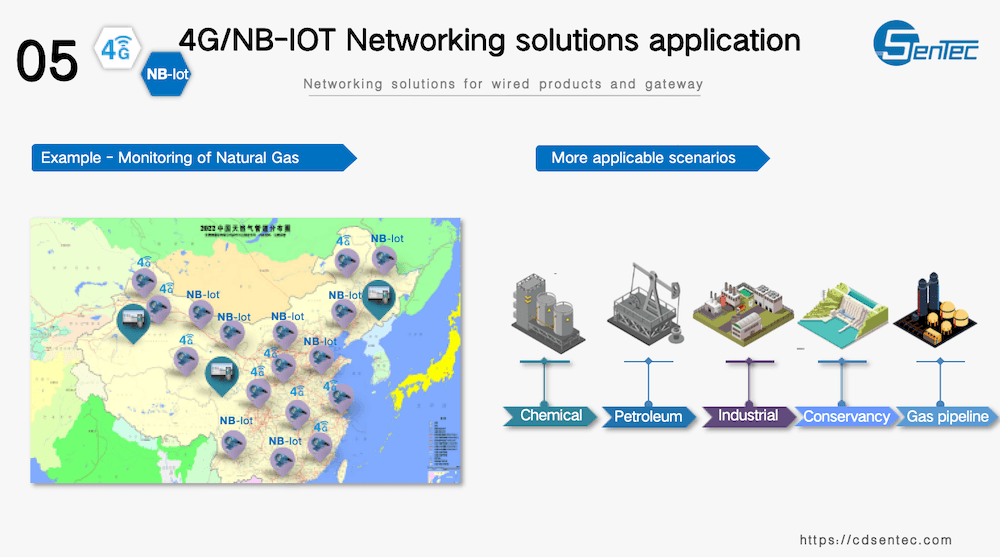
Water Distribution Networks
- Challenge: Monitor pressure across distributed pipeline network
- Solution: NB-IoT transmitters at key nodes
- Benefits: Leak detection, pressure optimization, reduced water loss
- Reporting interval: Every 15-60 minutes
Oil & Gas Wellheads
- Challenge: Remote locations, critical safety monitoring
- Solution: 4G transmitters with real-time alerts
- Benefits: Early warning of pressure anomalies, reduced site visits
- Reporting interval: Every 1-5 minutes
Industrial Process Control
- Challenge: Multiple pressure points in manufacturing
- Solution: 4G transmitters integrated with SCADA
- Benefits: Process optimization, quality control, safety compliance
- Reporting interval: Every 10-30 seconds
Fire Suppression Systems
- Challenge: Ensure system readiness, detect leaks
- Solution: 4G transmitters with instant alerts
- Benefits: Compliance monitoring, rapid fault detection
- Reporting interval: Every 5-15 minutes
Agricultural Irrigation
- Challenge: Large areas, battery-powered operation
- Solution: NB-IoT transmitters with solar panels
- Benefits: Water conservation, automated control, cost savings
- Reporting interval: Every 1-4 hours
Troubleshooting Guide
No Data Received:
- Check battery voltage
- Verify SIM card activation and balance
- Confirm network coverage
- Check APN configuration
- Verify cloud platform credentials
Inaccurate Readings:
- Check for sensor damage or blockage
- Verify installation orientation
- Perform zero/span calibration
- Check for temperature effects
- Inspect process connection for leaks
Frequent Disconnections:
- Improve signal strength (antenna, location)
- Check for network congestion
- Adjust transmission timeout settings
- Verify power supply stability
- Update firmware
High Battery Drain:
- Reduce transmission frequency
- Check for signal strength issues
- Disable unnecessary features
- Verify sleep mode operation
- Replace aging battery
Conclusion
Wireless pressure transmitters represent a practical solution for remote monitoring in industrial applications of all types. Wireless pressure transmitters with 4G/NB-IoT connectivity represent a significant advancement in industrial monitoring, offering flexibility, cost savings, and enhanced capabilities compared to traditional wired systems. By carefully selecting the appropriate technology, properly implementing the system, and following best practices, organizations can achieve reliable, long-term remote pressure monitoring that improves safety, efficiency, and operational decision-making.
FAQs
Q1. Is NB-IoT considered a 4G or 5G technology? NB-IoT is primarily known as a 4G technology, but it has been incorporated into 5G systems as well. It plays a vital role in supporting 5G low-power wide-area (LPWA) use cases, making it compatible with both network generations.
Q2. How does a wireless pressure transmitter function? A wireless pressure transmitter measures pressure and converts these readings into electrical signals. These signals are then transmitted wirelessly to receiving devices like control systems or monitoring stations, eliminating the need for physical wiring connections.
Q3. What is the NB-IoT protocol used for? NB-IoT (NarrowBand-Internet of Things) is a standards-based low-power wide-area technology designed to enable various IoT devices and services. It significantly improves power consumption, system capacity, and spectrum efficiency, particularly excelling in deep coverage scenarios like underground or indoor locations.
Q4. What are the main differences between 4G and NB-IoT for pressure transmitters? 4G offers higher data rates (1-100 Mbps) and lower latency (50-100 milliseconds), making it suitable for real-time applications. NB-IoT provides superior signal penetration with 20 dB coverage improvement, lower power consumption enabling 10+ years of battery life, but slower data rates (26-66 Kbps) and higher latency (1-10 seconds).
Q5. How long can wireless pressure transmitters operate on battery power? Battery life for wireless pressure transmitters depends on data transmission frequency and environmental conditions. NB-IoT devices with optimized duty cycles can achieve longer operation on a single battery.