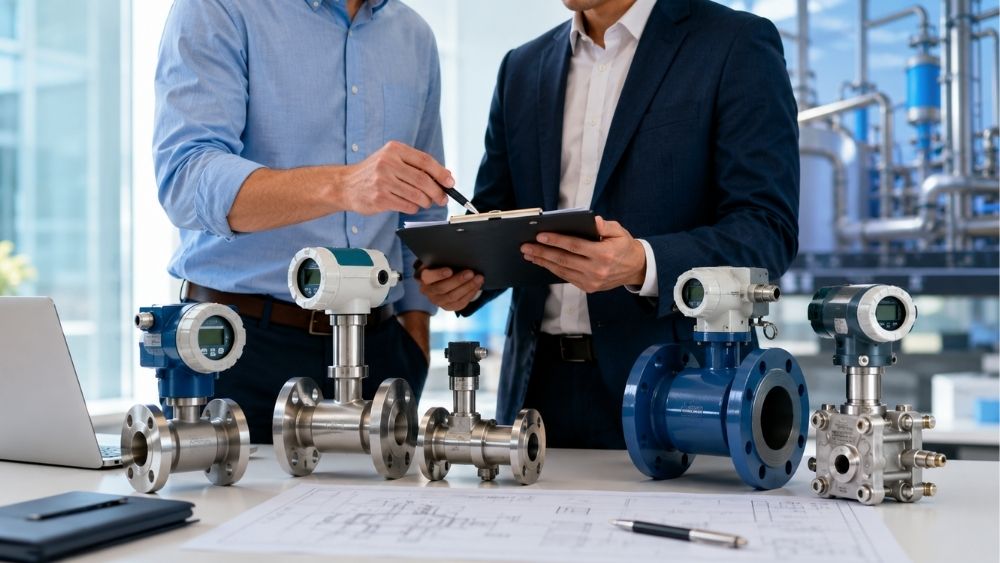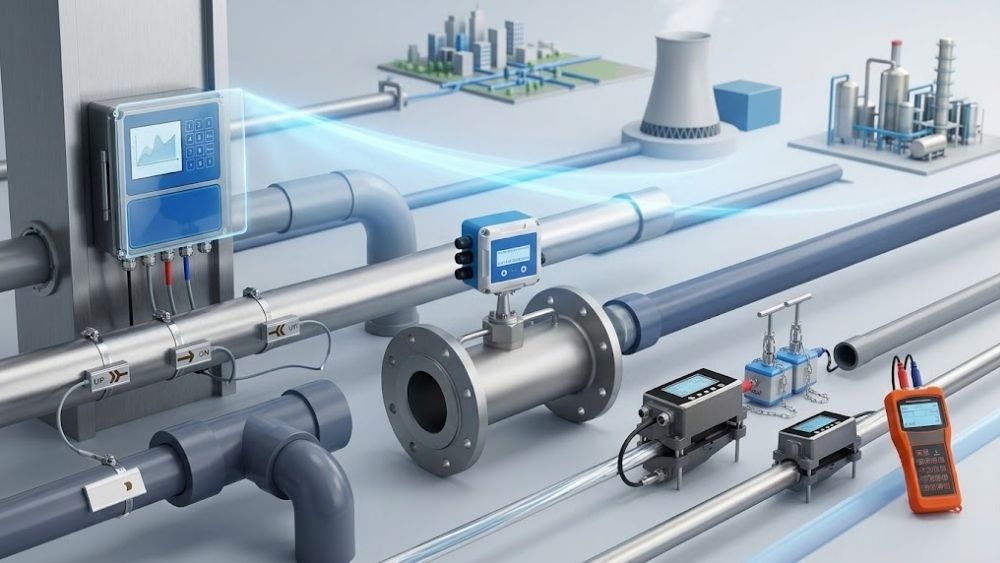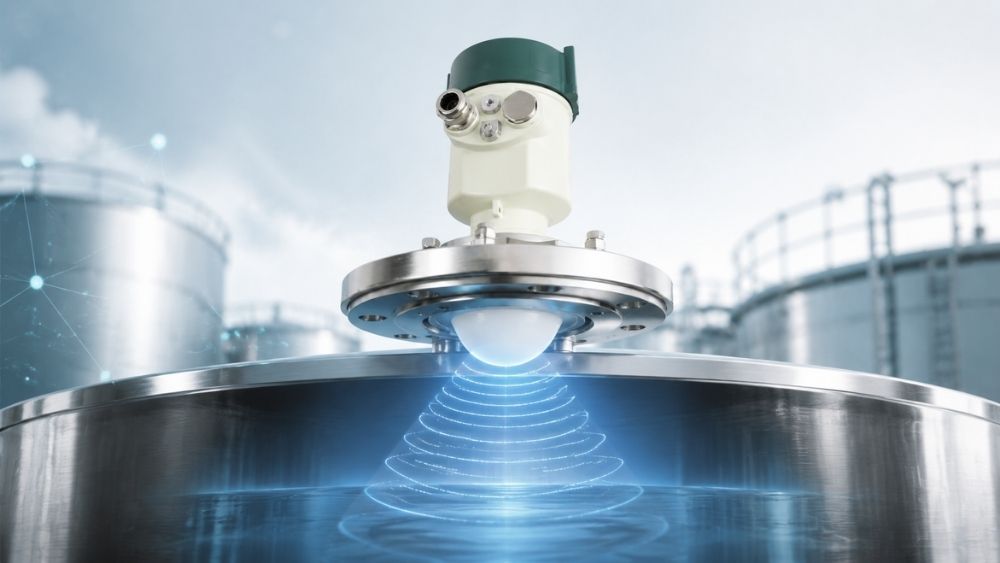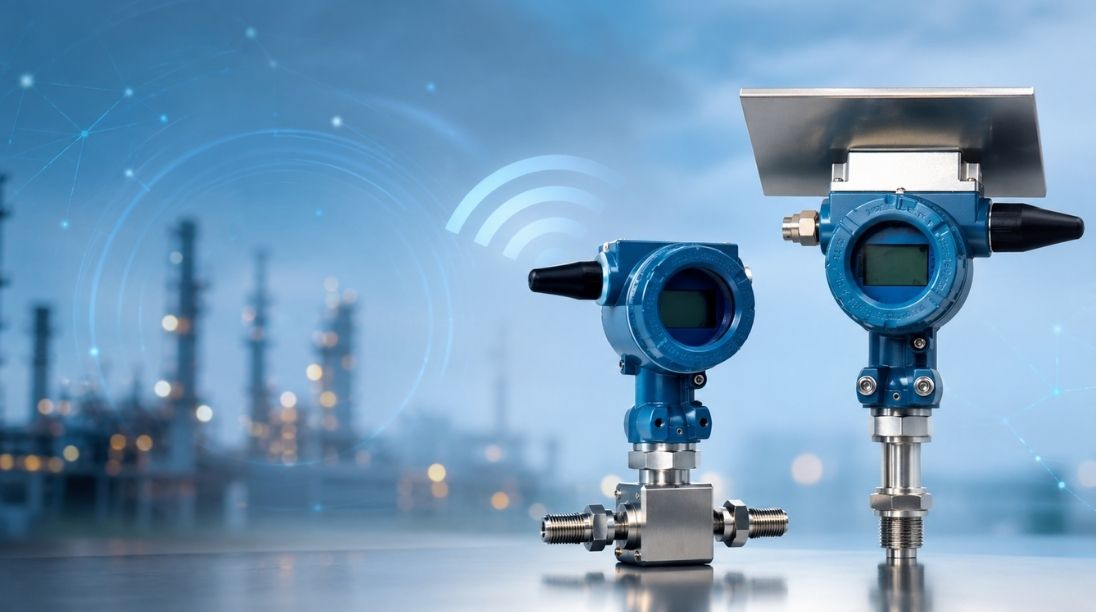
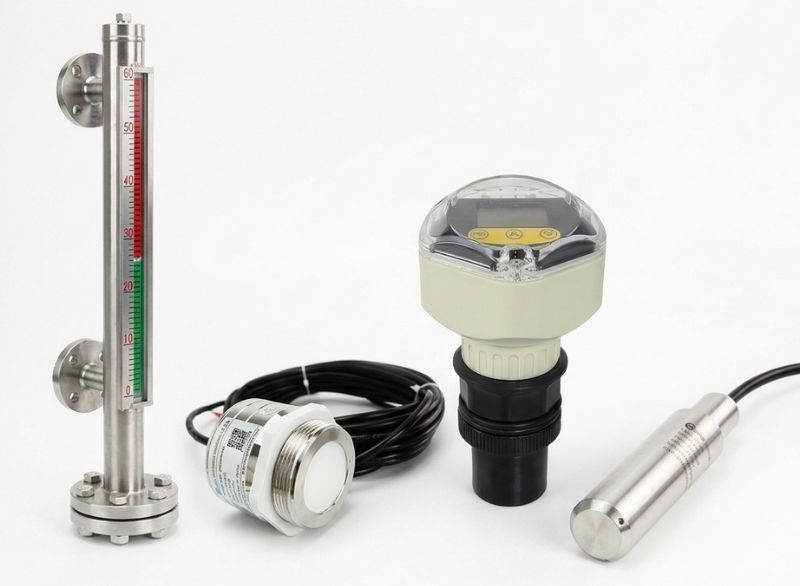
Continuous level measurement provides immediate monitoring of material levels throughout the whole span of tanks and vessels. This capability is essential to control processes, maintain safety and optimize industrial operations. The choice between continuous monitoring and point level detection can affect your operation’s accuracy, costs and reliability by a lot.
We’ve created this piece to help you understand point level vs continuous level measurement systems. You’ll learn how each type of level measurement works, when to use specific level instruments and which point level or continuous sensors best fit your application requirements.
What is Level Measurement and Why Does It Matter
Level measurement determines the height or volume of liquids, solids, or gasses within containers and tanks. This process is the foundation of industrial operations where material quantities must be tracked, controlled and managed with precision.
The Role of Level Measurement in Process Control
Accurate level measurement maintains consistency in production processes and will give uniform product quality. Monitoring material levels with precision supports automated control systems for exact level regulation and enhances operational stability by minimizing fluctuations.
The operational benefits extend beyond simple monitoring. Optimized material storage and transfer minimize waste, while accurate levels in processing tanks reduce downtime. Energy efficiency improves through proper resource allocation. Preventing overflow and spillage reduces hazards in industrial environments. Equipment protection comes from avoiding dry running of pumps and machinery, which prevents mechanical damage that affects uptime. The safe handling of hazardous liquids and chemicals becomes manageable with reliable level data.
Process control depends on maintaining correct liquid levels to ensure smooth and efficient operations. Chemical reactions require the ratio of reactants to be controlled with care to achieve desired products. Any deviation in liquid levels can result in suboptimal reactions and lead to poor quality products or hazardous situations. Cost efficiency follows when you monitor levels with precision and ensure only necessary amounts of materials are used, thereby reducing excess usage and wastage.
Point Level vs Continuous Level Measurement Basics
Point level measurement detects when material reaches a specific, predefined point such as maximum or minimum levels. This method signals when tanks are full or empty and answers a simple question: has the level reached this point? Point level measurement detects whether material reaches a specific point within a tank or container and signals high, low or intermediate levels.
Continuous level measurement provides live, continuous readout of material levels within containers. This method tracks liquid levels constantly and provides ongoing monitoring and data. The approach is ideal for applications where maintaining a specific level is critical for energy efficiency and cost reduction. Continuous measurement offers an exact level reading over the full range of containers and enhances process control and inventory management.
Industries That Rely on Level Instruments
Chemical processing plants require accurate dosing and blending of chemicals for product quality and safety. Level sensors ensure precise measurements and control throughout these operations. Stable level control in chemical plants helps prevent overflow, material shortages and process imbalance while ensuring continuous and safe operation.
Water and wastewater treatment facilities use level instruments to comply with EPA guidelines through accurate monitoring. These sensors help manage treatment processes and prevent overflows. Level measuring instruments monitor water tanks, sedimentation basins, pumping stations and sewage pipelines.
Food and beverage production relies on level sensors to ensure hygiene and consistency. Hygiene and safety standards are critical to maintain, with sensors providing reliable measurements that maintain product quality. Pharmaceutical and biotech industries depend on level instruments for FDA compliance and batch integrity. Accurate measurements and control throughout production processes ensure regulatory adherence.
Industrial manufacturing uses live monitoring of production lines to optimize processes and improve efficiency. Oil and gas operations, power generation facilities, and cement and mining operations all depend on level instruments for safe and efficient operations.
Point Level Sensors: When to Use Them
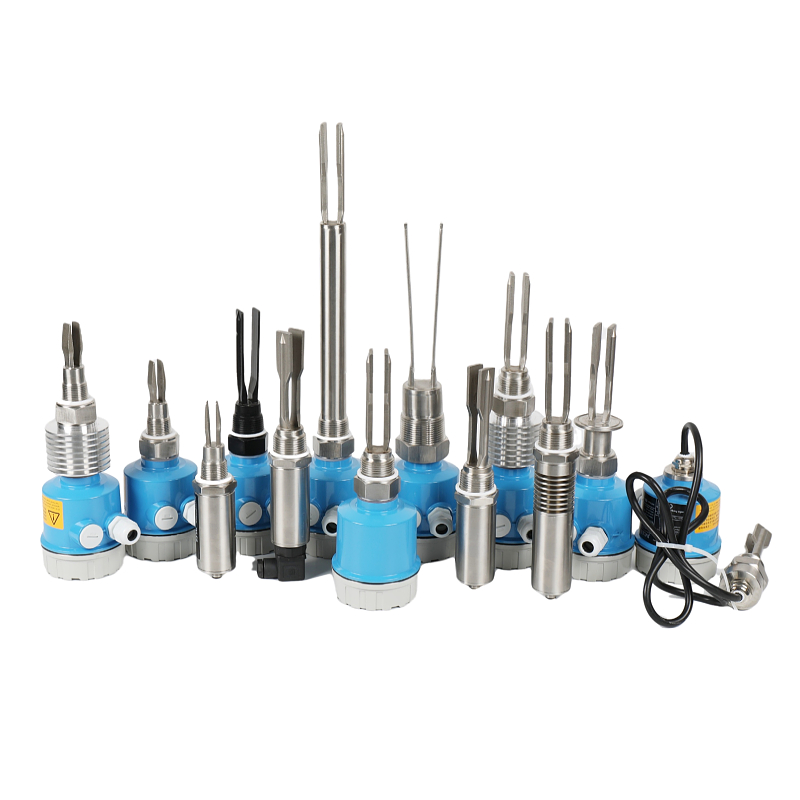
Point level sensors detect presence or absence of material at a predefined location within tanks and vessels. The sensors operate as switches, triggering an on/off signal when liquid or solid material reaches the detection point.
How Point Level Measurement Works
Point level measurement relies on switching mechanisms that activate when material contacts the sensor at its installed position. The sensor’s installation determines the detection point, with rod probes measuring from above based on rod length. The device generates a switching signal to control equipment or activate alarms when material reaches this threshold.
Point level devices provide simple on/off signals and keep operations straightforward. Each measurement point requires one device to alarm. Your control room will need two separate devices installed at different heights if it needs to monitor both high and high-high alarms in a lift station.
Types of Point Level Sensors
Float sensors contain a magnet that travels along a stem as liquid rises or falls and activates a switch based on the magnetic field generated. Reed switches work with float sensors due to their durable construction and precise measurement with less than one percent deviation. These sensors suit simple applications at budget-friendly prices but contain moving parts that can wear over time.
Optical sensors transmit infrared light through an LED and calculate level changes based on reflected light. Optical designs have no moving parts, unlike float sensors. They detect liquid from 1 mm contact and provide accurate switching that works with transparent, opaque, or particulate-laden liquids. The sensors withstand high temperatures and come in various sizes for different applications.
Capacitive sensors measure changes in capacitance and work well for reflective, sticky, or viscous fluids. They can be custom adjusted and are available in food-safe materials. The sensors use a probe to check level changes converted into analog signals.
Vibrating fork sensors oscillate at resonant frequency and change when the fork enters the medium. The oscillating system vibrates at its resonant frequency until product covers the sensor and damps the amplitude. External vibration or flow properties don’t impair measurement, and the sensors require no maintenance or adjustment. They detect overfill conditions and prevent dry-running in applications with turbulence or air bubbles.
Ultrasonic switches emit high frequencies reflected back for measurement. These non-contact sensors operate in everything from oils to inks and withstand high pressure, temperature, and vibration. They suit applications in agriculture, mining, construction, and printing.
Conductivity sensors use probe electrodes with alternating current. Electrodes form part of an electric circuit and signal level status when liquid covers the probe.
Advantages of Point Level Detection
Point level measurement offers simplicity and ease of operation. The sensors are affordable and have proven reliability over years of use. Advanced RF point-level devices provide excellent spill and overfill protection with simple installation and no moving parts, making them maintenance-free. Their resilient design ignores coatings and makes them ideal for wastewater applications.
Best Applications for Point Level Sensors
Point level detection excels in high and low-level alarms, overfill prevention, and pump protection and control. The sensors indicate full or empty states in tanks. Vibrating fork switches provide high and low level alarms with minimal tank intrusion, while solids switches handle level switching for various solid materials.
Continuous Level Measurement: When You Need Real-Time Data
Immediate data has become non-negotiable for operational efficiency in industrial processes. Continuous level sensors deliver this by tracking material levels throughout the entire container range and provide constant feedback on tank contents.
How Continuous Level Sensors Provide Ongoing Monitoring
Continuous level sensors measure the distance between the sensor and the material surface, then convert that distance into an exact level reading. The sensors provide continuous output that corresponds to the precise level within tanks. This immediate tracking allows you to monitor incremental changes in material height for accurate inventory management.
The measurement updates occur at regular intervals and give you current percentage content of containers at all times. Output signals integrate into control loops of process control systems and enable automated responses to level changes. You can display fill levels through various methods, from indicator lights and digital displays to web server-based solutions available on smartphones and tablets.
Key Technologies for Continuous Measurement
Float-based systems use mechanical floats with reed switch or potentiometric output. They are stable and affordable for simple applications. Ultrasonic technology employs non-contact sensing with no moving parts and handles corrosive, sticky, or dirty media well. Guided wave radar delivers high-accuracy measurements using radar pulses. It suits high-pressure, high-temperature environments up to 2000 psi and temperatures ranging from -40°F to 160°F.
Resolution can reach down to 0.125 inches for precise measurements. These sensors output through 4-20 mA, HART, analog, or digital signals. Capacitive sensors use probe rods and tank walls to form capacitors and detect level changes through capacitance variations. Gamma radiation-based measurement works irrespective of pressure, temperature, viscosity, or chemical properties. It provides reliable monitoring in extreme conditions.
Benefits of Continuous Level Measurement
Continuous monitoring optimizes inventory management and reduces costs by informing you of exact container contents. 67% of industrial enterprises now implement IoT-enabled automation for immediate inventory tracking. The chemicals sector saw a 39% increase in continuous monitoring adoption since 2021 as plants transitioned to digital workflows.
Dairy processing plants achieved a 73% reduction in product variance since 2020 through ultrasonic level sensor implementation. The food sector is projected to account for 22% of all continuous monitor sales by 2026.
Industries and Processes That Need Continuous Monitoring
Water and wastewater treatment facilities use these sensors for precise reservoir management and chemical dosing control. Chemical and petrochemical processing requires exact level data for batch consistency. Food and beverage manufacturers rely on continuous measurement to maintain optimal CO2 concentration in carbonated drinks. Medical equipment, semiconductor manufacturing, and off-highway vehicles all depend on continuous level instruments for critical operations.
Comparing Point Level and Continuous Level Measurement Systems
Performance characteristics differ when you compare point level vs continuous level measurement approaches. Understanding these differences helps you match the right sensor technology to what you just need for operations.
Measurement Range and Data Output
Point level sensors deliver binary on/off signals at predetermined thresholds. Each alarm point requires a separate device installation. Continuous level sensors provide analog or digital outputs across the whole measurement span. These systems transmit data through 4-20mA signals, HART protocol or digital communications. Non-contact technologies like radar and ultrasonic extend measurement ranges up to 39m. Loop-powered TDR products reach about 35m in selected applications. Magnetostrictive technology offers ranges up to 12m.
Installation Requirements and Complexity
Point level devices mount through tank walls or require full insertion into vessels. Continuous measurement instruments often stay above the liquid surface without wetted contact. Top-down radar and ultrasonic sensors measure distance from the device to the liquid surface. Tank height configuration converts measured values into actual liquid height. Ultrasonic installations need careful positioning to avoid dead band interference and maintain proper distance from tank walls.
Accuracy and Response Time
Float switches achieve less than one percent deviation in measurements. RF admittance technology delivers accuracy down to 0.8mm in short-span applications. Magnetostrictive sensors provide 0.1% accuracy of measurement span with exceptional speed. This makes them suitable for custody transfer applications where precision matters. Point level technologies offer adequate accuracy for threshold detection but lack the resolution needed for precise inventory tracking.
Cost Comparison and ROI
Point level systems require lower original investment and simpler installation procedures. Continuous sensors carry higher upfront costs due to advanced electronics and calibration requirements. Continuous transmitters unite multiple measurement points into one device. They can offset their higher price through reduced hardware complexity. Long-term maintenance expenses favor solid-state sensors over mechanical alternatives.
Maintenance and Long-Term Reliability
Mechanical components in float switches wear over time and increase maintenance demands. Solid-state optical and ultrasonic sensors eliminate moving parts. This reduces service requirements. Continuous measurement devices need periodic calibration and skilled maintenance personnel. Non-contact systems like radar require less maintenance compared to wetted sensors.
Selecting the Right Level Measurement Solution for Your Application
Incorrect level measurement device selection decreases quality and operational consistency. Material properties shape your decision process.
Material Type and Properties to Think About
Chemical composition determines sensor material compatibility. Corrosive liquids require PVDF, PTFE, or 316SS construction. Stainless steel handles acids and chemical-based liquids. Polypropylene suits hot-water applications and acidic liquids up to 105°C. Brass works with petroleum-based liquids in vehicle and hydraulic applications. Nylon detects oils and petroleum. To handle aggressive acids and industrial-grade liquids, polyphenylene sulfide offers chemical resistance.
Dielectric constant, density, and viscosity affect the sensor’s performance. Temperature and pressure specifications must match process conditions. You need to think about process temperature, ambient temperature, and media temperature.
Tank Size and Environmental Factors
Tank height dictates maximum measurement range requirements. Vented versus sealed tanks shape the selection process. Tank shape matters. Submersible sensors fit narrow wells while radar handles irregular tanks. Outdoor applications need NEMA 4 sensors. Hazardous environments require explosion-proof designs with proper certifications.
Safety and Regulatory Requirements
Storage tanks containing hazardous materials require safety instrumented systems that comply with IEC 61511 and API 2350 standards. Continuous level sensors need annual testing, while point level sensors require semi-annual proof-testing.
Integration with Control Systems
Analog 4-20mA outputs remain compatible with most industrial systems. Digital protocols like Modbus and IO-Link enable advanced diagnostics and remote monitoring.
Conclusion
Choosing between point level and continuous measurement systems depends on your specific operational requirements. Point level sensors work well when you need simple high/low alarms and overfill protection, particularly if budget constraints matter. Continuous sensors deliver the live data necessary for precise inventory management and process optimization.
I recommend evaluating your material properties, tank configuration and safety requirements before making a decision. Both technologies have proven track records in industrial applications, so the right choice comes down to matching sensor capabilities with your actual process control needs rather than selecting based on technology alone.