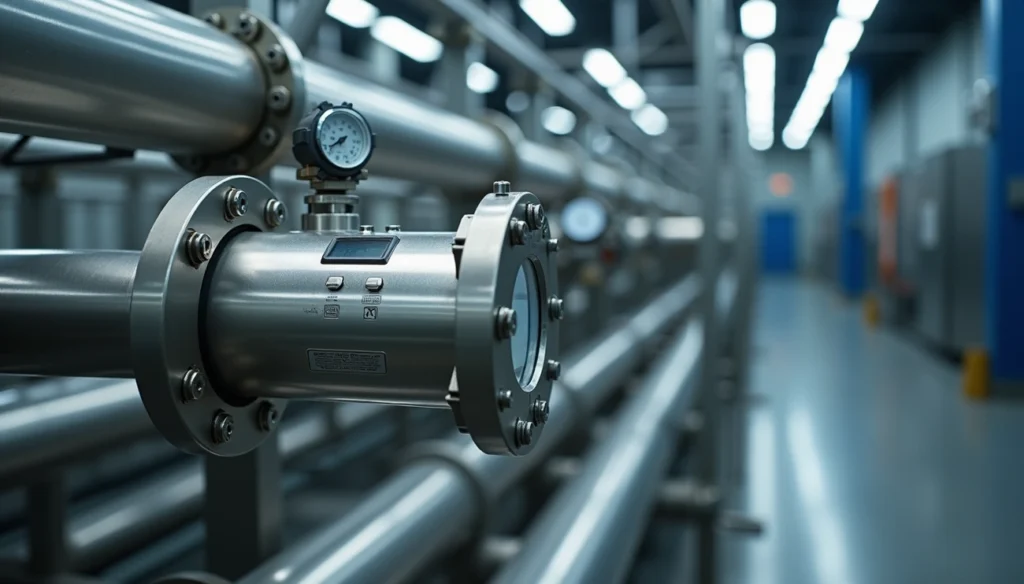
Choosing the right flow meter for gasses requires understanding what these devices do. A flow meter is a device that measures the flow rate of a fluid, including the linear, nonlinear, mass, or volumetric flow of a gas or liquid. The challenge is to select from various technologies, each with distinct advantages for different applications.
You might need an air flow meter for pneumatic systems, compressed air flowmeters for manufacturing processes, or specialized mass flow meter for gasses in chemical applications. Knowledge of air flow meter technologies becomes important here. Volumetric flow meter options range from simple rotameters to sophisticated vortex designs. Each suits specific industrial requirements.
This piece walks you through the core measurement technologies, common meter types, industrial applications and practical selection criteria. These will help you make an informed decision.
Understanding gas flow measurement technologies
Gas measurement technologies split into two fundamental approaches. Each serves distinct operational needs.
Mass flow vs volumetric flow measurement
Mass flow measures the actual number of molecules moving through a system. Temperature or pressure fluctuations don’t affect it. This measurement type uses units like standard liters per minute (SLPM), standard cubic centimeters per minute (SCCM), or kilograms per second (kg/s). All are referenced to standard temperature and pressure conditions. Thermal mass flow meters and Coriolis meters provide direct mass flow readings. They don’t require additional pressure or temperature compensation.
Volumetric flow measures the physical space a gas occupies as it moves through a system. Common units include cubic meters per hour (m³/h), liters per minute (LPM), or cubic feet per minute (CFM). Gas volume expands with temperature increases and contracts with pressure increases. This makes volumetric measurements sensitive to changing process conditions. Mass flow offers superior accuracy and reliability for compressed air flowmeters and process gas applications where conditions fluctuate.
Inline gas flow meters
Inline meters integrate a complete flow body into your process line as a spool piece. These meters measure the entire cross-sectional area of the flow profile. This provides accurate representation of the gas velocity. Built-in flow conditioning elements optimize gas flow profiles and substantially reduce straight run requirements compared to meters without conditioning.
Inline configurations work especially when you have pipe sizes under 2 inches in diameter. Installation requires cutting into the flow line, though. This increases both material and labor costs. This trade-off delivers better accuracy through precise cross-sectional area calculation for smaller pipes.
Insertion meters feature a probe that extends into the process pipe through a valve assembly or compression fitting. These meters cost less at the start, especially in larger pipe sizes above 2 inches. They require minimal pipe modification. Installation flexibility allows removal without process shutdown when coupled with an isolation valve.
Moving parts vs no moving parts designs
Mechanical insertion meters measure flow with rotors, impellers, or turbines that rotate with the gas stream. These moving components wear over time. This changes geometry and measurement accuracy. Bearings require more energy to turn as they age, which affects performance.
Non-mechanical designs use electrode sensors or thermal elements to calculate flow without physical movement. These meters maintain accurate readings over extended periods with no moving parts to jam or break. They require less maintenance.
Common types of air flow meter for industrial use
Five main technologies dominate industrial gas flow measurement. Each offers distinct capabilities to specific applications.
Thermal flow meters for gasses
Thermal meters measure gas flow by tracking heat transfer from a heated sensor element. The design uses two temperature sensors. One measures the gas temperature as reference while the second stays heated at a constant differential above the first. Gas flows past the heated sensor and the electric current required to maintain that temperature difference indicates mass flow rate[101]. This method delivers exceptional sensitivity at low gas velocities under 25 feet per minute. It beats other technologies by a wide margin. Thermal meters suit compressed air monitoring, natural gas measurement and biogas applications without requiring pressure or temperature compensation. Turndown ratios reach 100:1[101] and accuracy between 1% to 3%.
Vortex technology
Vortex meters exploit the Von Karman effect. Gas passing a bluff body generates alternating vortices at frequencies proportional to flow velocity. The frequency of vortex shedding associates with volumetric flow. These meters maintain accuracy between 0.7% to 2.5% across turndown ranges from 10:1 to 40:1. They have no moving parts. Integrated pressure and temperature sensors enable mass flow compensation to gas applications[112].
Rotameters and variable area meters
A rotameter features a tapered tube with a float that rises proportionally to flow rate. The float reaches equilibrium where upward drag force equals its weight. These simple devices require no external power. They deliver repeatability within 0.25% of actual flow under stable conditions, though typical accuracy ranges from 1.6% to 5%. Rotameters must mount vertically to operate properly.
DP meters to gas applications
Differential pressure meters calculate flow by measuring pressure drop across a restriction using Bernoulli’s principle. Various geometries including orifice plates and venturi tubes suit different applications. Accuracy typically ranges from 3% to 5%. Non-linear response affects low-flow performance.
Coriolis meters to high accuracy
Coriolis meters measure mass through vibrating tubes and achieve accuracy between 0.1% to 0.5%. This is the highest among gas flow technologies. These meters output mass flow, density and temperature without requiring compensation.
Industrial applications for gas flow meters
Real-life deployment of gas flow meters spans multiple critical industrial processes where accuracy affects costs and efficiency.
Compressed air flowmeters in pneumatic systems
Compressed air consumes more electricity than any other equipment system in industrial facilities. Thermal mass flow meters help identify leaks in compressor systems and track usage patterns to reduce consumption. These meters can save thousands of dollars each month. A typical compressor system running at 100 psi with just a quarter-inch leak wastes 100 CFM of compressed air. Air compression achieves only around 15% efficiency and wastes approximately 5-6 kWh for every 1 kWh of useful work.
Process gas monitoring
Compressed air flow rate measurement helps determine when and where gas gets used. It identifies wastage and improves operational efficiency. Flow data optimizes distribution and determines equipment effectiveness for facilities with multiple compressors.
Combustion air measurement
Thermal mass flow meters measure combustion air to boiler fuel. The air-fuel ratio represents the mass ratio required for optimal combustion. Incomplete combustion results from insufficient air. This reduces efficiency and releases unburnt fuel. Excess airflow wastes energy by heating and releasing unnecessary air into the atmosphere.
Gas mixing applications
Gas mixing and blending just need accuracy and precision control. Applications include creating artificial atmospheres and manufacturing processes, along with inerting and gas chromatography.
How to choose an industrial gas flow meter
Selecting the appropriate flow meter for gasses requires evaluating four critical factors that determine long-term performance and value.
Matching technology to your gas type
Gas characteristics dictate technology selection. Dry, clean gasses work with all technologies, while wet gasses containing moisture droplets need specific solutions. Thermal meters using constant power technology resist moisture effects better than constant temperature designs. Single gasses allow straightforward calibration, whereas gas mixtures need Coriolis or multi-gas thermal meters. Ultrasonic non-intrusive or strong mechanical designs prevent sensor contamination for gasses with particulates.
Accuracy and repeatability needs
Accuracy describes how close measurements align with true values, while repeatability indicates consistent readings under similar conditions. Custody transfer applications demand accuracy within 0.1%, whereas process monitoring accepts 2-3% tolerances. Repeatability matters more for process control since consistent readings enable trend analysis even without perfect accuracy.
Installation requirements
Straight run requirements vary by technology. Thermal mass meters need 15-20 pipe diameters upstream and 5-10 downstream for optimal performance. Installations near elbows and valves create flow disturbances that degrade accuracy. Clamp-on ultrasonic meters eliminate pipe cutting but need proper acoustic coupling.
Price range considerations
Total cost of ownership has purchase price, installation expense, maintenance frequency and calibration requirements. Vortex meters cost less at first but differential pressure meters need higher installation investment. Coriolis technology carries premium pricing yet delivers lowest long-term maintenance costs.
Conclusion
Gas flow measurement might seem complex with its different technologies, but we’ve broken down what you need to know. Mass flow meters deliver consistency when conditions change, while volumetric options work well in stable applications. Your selection depends on gas characteristics, accuracy requirements and budget constraints.
What you’ve learned here will help you match the right technology to your specific needs. The correct meter choice will improve efficiency and reduce waste while delivering reliable data in the years to come.