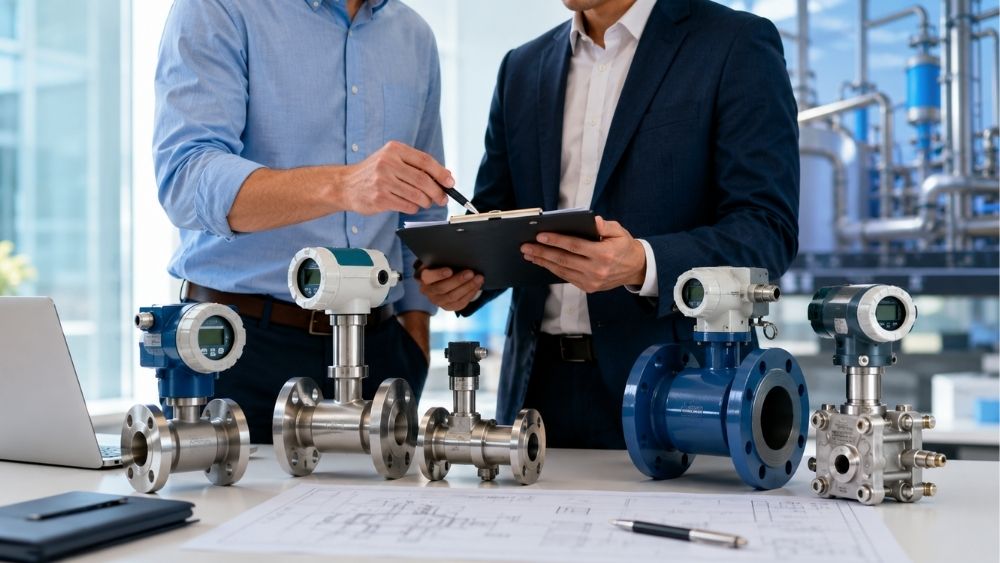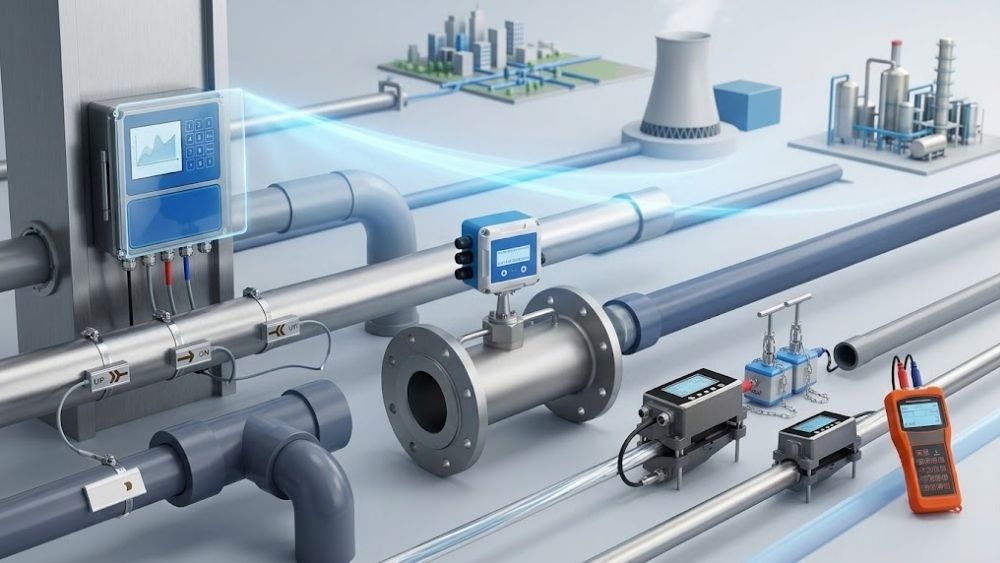
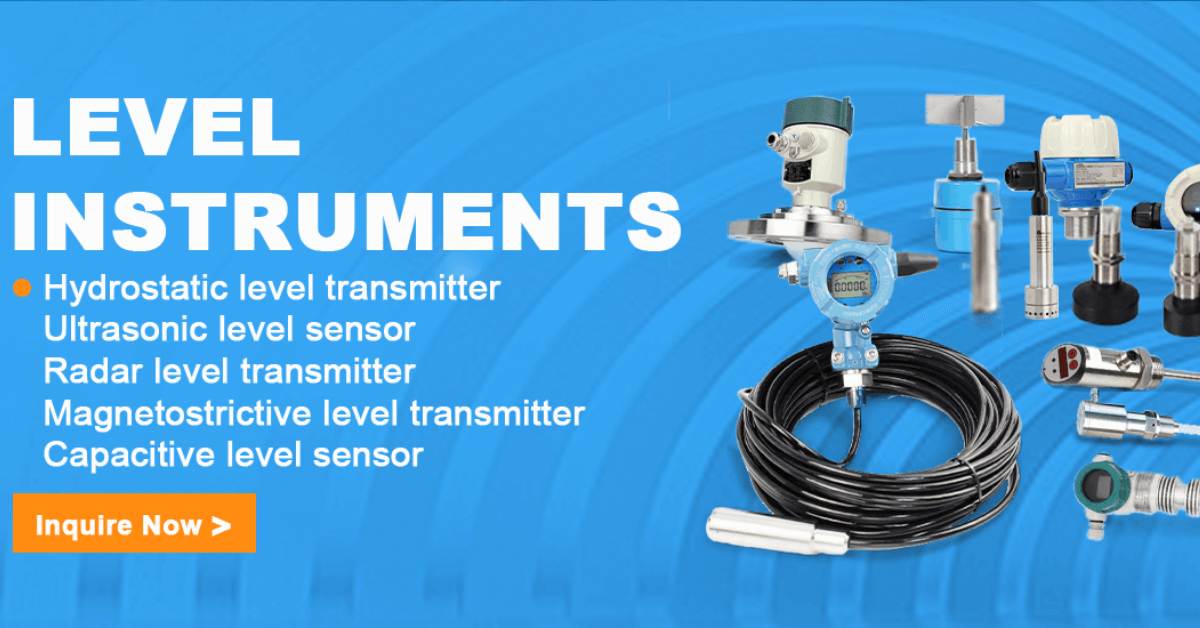
Level sensors have changed industrial operations over the last several years. This change is evident in food and beverage, medical, automotive, and agriculture sectors. These vital components have evolved by a lot. Many processes that needed expensive equipment are now possible with innovative, economical technologies.
Level sensors (also known as level switches or probes) monitor fluid levels reliably in tanks, pipelines, or vessels. The right liquid level sensors play a vital part to ensure accurate measurements and efficient operations in industries of all sizes. Accurate liquid level measurement forms the foundation of safe and efficient system operation.
This complete guide will show you different types of level sensors available today, ranging from mechanical options to those with no moving parts. You’ll learn how these sensors work, their unique advantages, and which industries get the most value from each type. This practical guide will help you make informed decisions about level sensors for tanks or types of level transmitters based on your specific needs.
What is a level sensor and how does it work?
Level sensors detect and measure the amount of liquids, powders, or granular materials in containers, tanks, or vessels. These devices turn physical material levels into electrical signals that trigger actions or provide continuous measurement data. The right sensor selection plays a vital role in your specific application.
Simple working principle
Level sensors turn physical material levels into measurable electrical signals. These sensors work through several detection methods: pressure changes, electrical properties (capacitance, conductivity), sound waves, or electromagnetic radiation. Different sensor types provide point level detection (suggesting whether material is above or below a specific point) or continuous level measurement (measuring the exact level within a range).
Point level sensors, also known as level switches, detect media presence at a defined installation point. Continuous level sensors measure throughout a tank or container. To name just one example, capacitive level sensors measure capacitance changes between electrodes as material levels change. Ultrasonic sensors calculate distance by timing how long sound waves take to bounce off material surfaces and return.
Contact vs non-contact sensors
The main difference between level sensor technologies lies in their physical contact with the measured material.
Contact sensors touch the substance they measure. These include:
Float sensors that rise and fall with liquid levels
Capacitive probes that measure electrical properties through direct contact
Vibrating fork or rod sensors that detect material presence through frequency changes
Conductive sensors that measure electrical conductivity between electrodes
Contact sensors provide affordable solutions for standard applications but face challenges with corrosive substances or high-pressure environments.
Non-contact sensors measure from a distance. Common examples include:
Ultrasonic sensors that emit sound waves
Radar sensors that use electromagnetic waves
Optical sensors that detect levels using light beams
Laser-based systems that provide precise measurements
Non-contact measurement provides faster readings and prevents contamination. These sensors work well in hazardous or sterile environments, though they cost more than contact options.
Common use cases in industry
Level sensors perform significant functions in a variety of industries. Each industry has specific needs based on material properties and environmental conditions.
Water treatment facilities use these sensors to monitor tank levels and prevent overflow conditions. Food and beverage producers need level sensing to maintain liquid levels and ensure product quality while meeting hygiene standards.
Chemical processing plants monitor corrosive substances with these sensors. Non-contact options help prevent sensor damage and maintain safety protocols. The oil and gas industry uses level sensors to track storage tank inventory and prevent spills that could harm the environment.
Pharmaceutical manufacturing needs precise measurements to control liquid components in drug production. These sensors help maintain sterile conditions through non-contact methods.
Robots use point-level sensors to check fluid levels. The sensors identify errors and stop operations when levels drop below critical thresholds. Automated systems in various industries rely on these sensors to monitor oil reservoir levels for maintenance and safety.
8 common types of level sensors explained
The choice of measurement technology in industrial environments depends on specific application needs. Let’s look at the most common level sensor types industries of all sizes use today.
1. Float level sensors
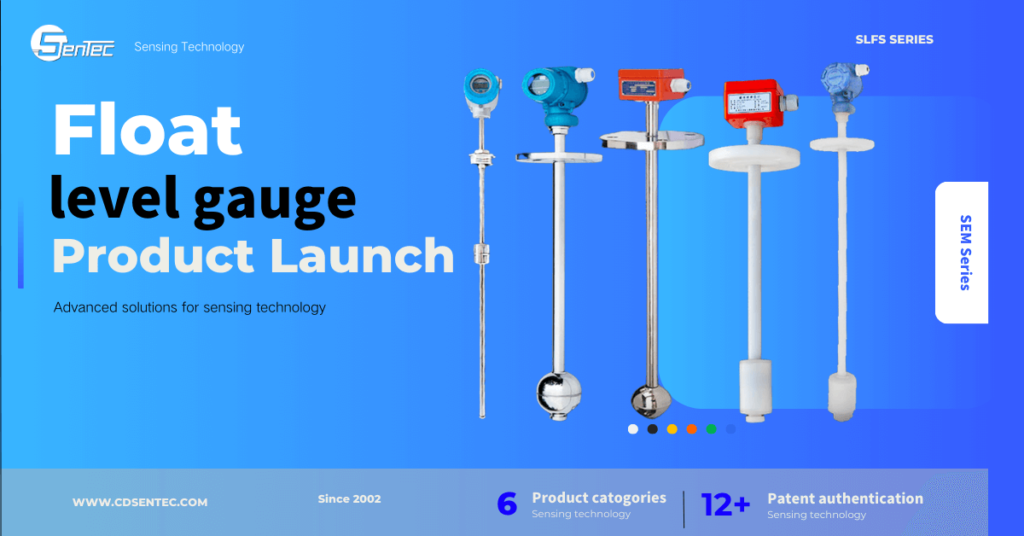
Float level sensors stand among the oldest and most budget-friendly technologies for liquid level detection. These devices feature a buoyant float with a magnet that moves up and down with liquid levels and activates a reed switch. The stainless steel float works on a simple principle – the force on a buoyant object equals the mass of liquid it displaces. Float switches need no power and give direct readings, which makes them reliable for water, oil, chemicals, and hydraulic fluid applications. Their performance can suffer in turbulent conditions where liquids move or “slosh” around.
2. Optical level sensors
Optical level sensors use infrared light to detect liquid presence. A prism-shaped tip houses an infrared LED and light receiver. The infrared light reflects back to the detector when the sensor tip sits in air. The light refracts out of the sensor tip when submerged in liquid, which triggers a state change. These compact sensors shine in applications that need high precision, high-temperature resistance, and detection of tiny liquid amounts. Their solid-state design without moving parts makes them perfect for leak detection and stopping run-dry conditions in coolant, oil, or hydraulic systems.
3. Ultrasonic level sensors
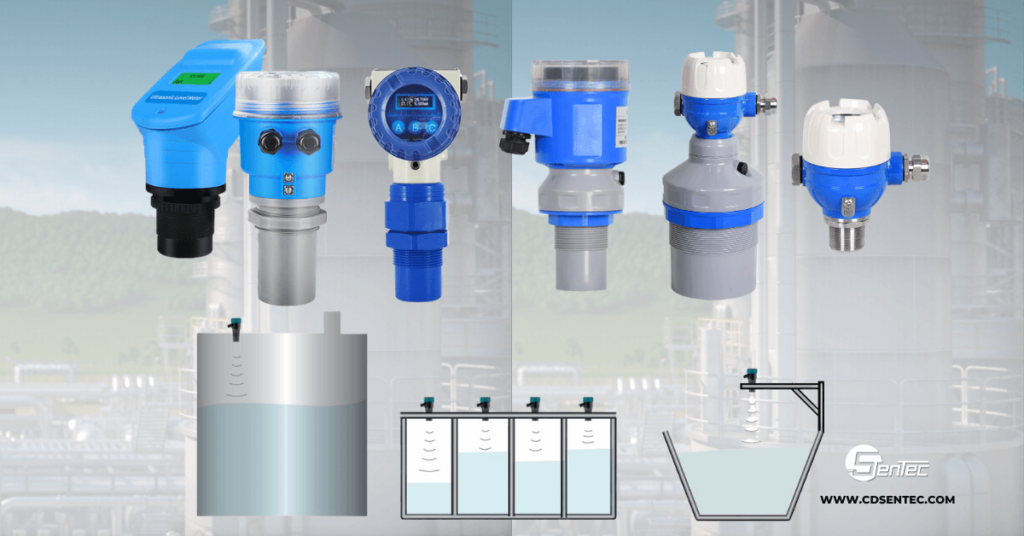
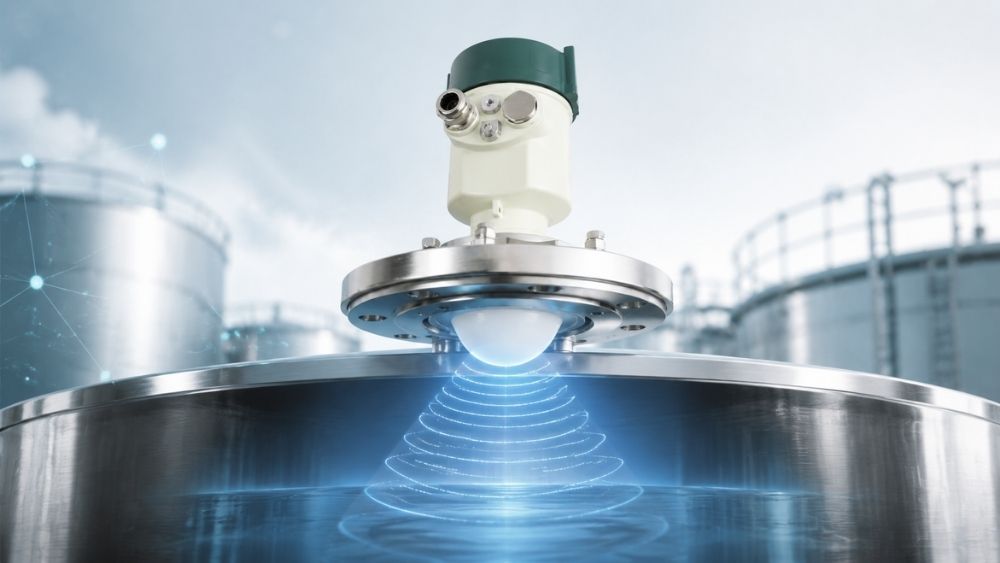
Ultrasonic level sensors measure continuously without contact by sending out high-frequency sound waves (typically 20-200 kHz) that bounce off material surfaces. These sensors calculate distance using the Time-of-Flight principle by measuring the sound waves’ return time after hitting the surface. They work great with abrasive and aggressive media, even in harsh conditions. The sensors don’t care about dielectric constants or density and need no maintenance thanks to their self-cleaning vibrating diaphragm.
4. Radar level sensors
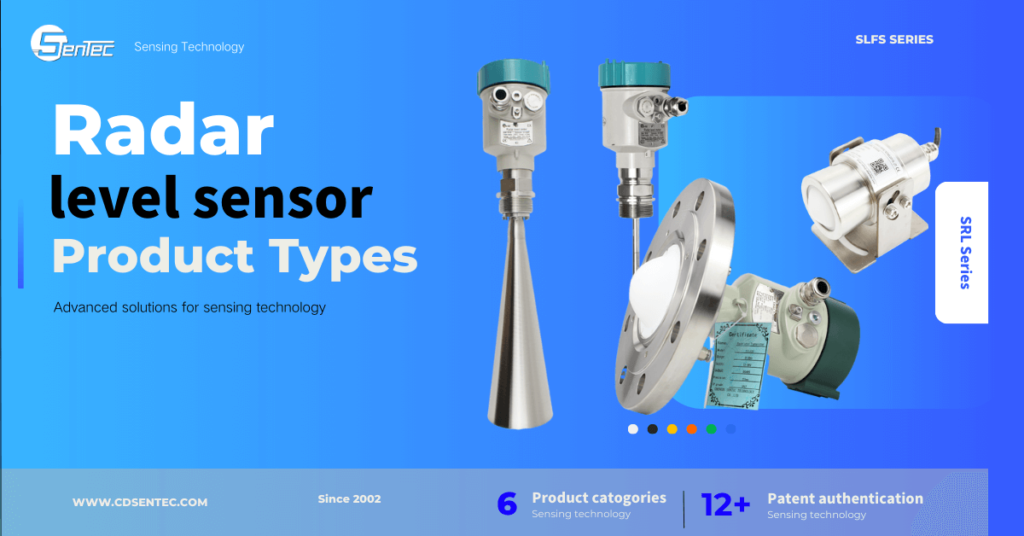
Radar level sensors employ electromagnetic waves instead of sound waves to measure material levels. These non-contact devices work with either Time-of-Flight (ToF) or Frequency-Modulated Continuous Wave (FMCW) principles. Modern radar sensors run at different frequency bands (6 GHz, 10 GHz, 26 GHz, and newer 80 GHz models). Higher frequencies give more precise measurements in smaller containers. Radar technology keeps working in environments with vapors, extreme temperatures, dust, wind, or foam, though it costs more than ultrasonic options.
5. Capacitance level sensors
Capacitance level sensors measure electrical capacitance changes between electrodes. The probe and tank wall create a capacitor that increases capacitance as liquid levels rise. This proven and budget-friendly solution works with both liquids and solids. Various transmitters can provide continuous measurement or point detection. These sensors excel in small tanks and with materials that form build-up. They usually need calibration for specific materials because of different dielectric constants.
6. Conductivity level sensors
Conductivity level sensors detect levels in electrically conductive liquids by measuring resistance changes between electrodes. The liquid completes a circuit when it touches both electrodes, which triggers a switching signal. Liquids need minimum conductivity of 10 µS/cm—most conductive liquids meet this except pure solvents. These sensors work well with multiple switching points through multiple electrodes. They offer simple instrumentation without moving parts, though electrodes may erode over time.
7. Vibrating (tuning fork) sensors

Vibrating fork sensors use a tuning fork that vibrates at its natural frequency. The vibration frequency drops when liquid covers the fork, which changes the output. This technology handles turbulence, bubbles, or varying products well. Its solid-state design without moving parts ensures reliable operation without wear or blockages. These sensors work great for overfill prevention and dry-run protection.
8. Magnetostrictive Level Sensors
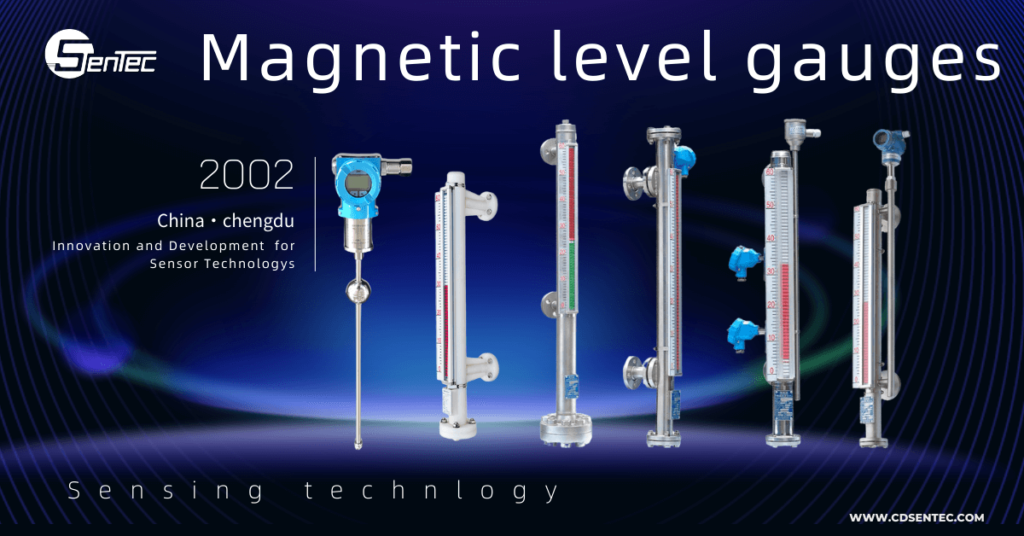
A magnetostrictive level sensor is used for continuous measurement of liquid level and interface, works on the principle of magnetostriction, where a magnetic field induces mechanical deformation in a magnetostrictive material. The sensor consists of a waveguide housed inside a probe and a magnetic float that moves along the probe with the liquid level. When a current pulse is sent down the waveguide, it generates a magnetic field that interacts with the magnetic field of the float. This interaction creates a torsional strain pulse that travels back through the waveguide to a sensor at the top. By precisely measuring the time between the initial pulse and the return signal, the sensor determines the exact position of the float and thus the liquid level. Magnetostrictive level sensors are known for their high accuracy, repeatability, and long-term stability. They are widely used in industries such as petrochemical, water treatment, food and beverage, and pharmaceuticals for monitoring liquid levels in tanks, especially in applications requiring precise and continuous level measurement.
Pros and cons of each level sensor type
You just need to understand each level sensor type’s strengths and limitations to select the right measurement technology. Let’s get into how these devices stack up against each other.
Accuracy and reliability
Level sensor precision varies between technologies. Ultrasonic and radar sensors can achieve high accuracies up to ±0.1%, while capacitance sensors give readings accurate to about ±0.2%. Traditional methods like float and dye markers usually deliver ±1-5% accuracy. Mechanical gages perform better at ±0.5% to ±1%.
Environmental conditions and sensor design affect reliability. Radar level sensors work consistently even in tough conditions because temperature, pressure, vapor, foam, or dust don’t affect them. Ultrasonic sensors are accurate but foam, condensation, turbulence, or uneven surfaces can compromise their performance.
Installation and maintenance
Float sensors are easy to install and don’t need much technical expertise. You can mount them by suspending from above or through a small tank wall hole. In spite of that, positioning matters—ultrasonic sensors might give false readings if they’re too close to agitators or inlet streams due to turbulence.
Different technologies have different maintenance needs. Traditional methods need regular calibration and servicing, which can increase costs over time. Non-contact sensors like radar and ultrasonic models need minimal upkeep and can run for long periods. Regular calibration helps prevent measurement drift over time for all sensors.
Cost and complexity
Sensor technologies vary in their upfront costs. Float switches are the most budget-friendly option for simple monitoring applications. Radar sensors cost the most, while hydrostatic sensors is slightly lower.
Advanced level sensors give excellent returns despite higher upfront costs. A chemical plant’s study showed ROI within 18 months after switching to modern level sensors. The returns came from less downtime and better process efficiency.
Environmental limitations
External conditions affect how well sensors perform and how long they last. Ultrasonic sensors have trouble with dust, fog, and particulate matter that block sound waves. Radar sensors handle these issues better but might struggle with materials that have low dielectric constants.
Temperature swings create big challenges. Off-highway equipment works in extremes from -40°C to 50°C, which can cause sensors to fail. Water and moisture can also corrode sensors and cause problems if they’re not protected well.
Choosing the right level sensor for your application
You’ll want a good understanding of your specific needs to pick the right level sensor. A full picture of your operation’s limits and conditions will help you make smart choices that balance performance and cost.
Factors to think about: liquid type, tank size, environment
Your measured material’s properties substantially affect which sensor you should choose. We needed to figure out if you’re measuring liquids, slurries, or solids—each one works best with different sensor technologies. Liquids come with properties like dielectric constant, density, and viscosity. Solids vary by size and shape, whether they’re granular, pellet, or powder.
Your tank’s shape is just as crucial. Height sets your range requirements, while shape determines where to put the sensor. Each vessel type—flat, round, or cone-bottomed—brings its own measurement challenges. The sensor’s performance can change based on things like condensation, steam, vapors, and foam in liquids, or dust in solids.
Your operating conditions are key factors:
Temperature range (both process and ambient)
Pressure conditions (high-pressure or vacuum)
Chemical compatibility with sensor materials
Required certifications for hazardous environments
Point level vs continuous level measurement
Point level devices work like simple on/off switches. They detect when material hits a specific level, which helps prevent overflow, run-dry situations, and leaks. These devices are usually more affordable and easier to set up.
Continuous level sensors give you exact measurements throughout the entire range, which makes them perfect for precision work. You can set functions at any level point through software instead of moving the device. This flexibility lets you change switching points by tweaking settings rather than touching the hardware.
Industry-specific recommendations
Water and wastewater facilities often picked point level devices because they’re simple and cost less. But now continuous measuring tools can handle multiple switching jobs while staying above the liquid, so they don’t get wet.
Food and beverage plants just need non-contact measurement methods to meet hygiene standards. Radar or ultrasonic sensors usually work best here.
Chemical processing plants must have sensors that resist aggressive substances. Material compatibility becomes the top priority. So non-contact radar sensors shine in these spaces because they handle corrosive conditions well.
Guided radar sensors measure more reliably in applications with foam or surface buildup because surface disturbances don’t bother them.
How level sensors are evolving with technology
Level sensing technology continues to advance faster, thanks to better connectivity, wireless communication, and miniaturization. These breakthroughs have altered the map of how industries monitor and manage their processes in a variety of applications.
Smart sensors and IoT integration
Internet of Things (IoT) technology combined with level sensors creates remarkable opportunities to monitor and maintain systems. Smart sensors now collect critical data such as temperature, moisture content, strain, and other vital characteristics from materials. This connection lifts level monitoring to new heights by creating networks that enable up-to-the-minute communication between materials and their surroundings.
Cloud-based platforms play a key role in this development. Operators can access data from anywhere and get applicable information. To cite an instance, water treatment facilities use IoT-enabled sensors that send instant alerts about overflows. This helps reduce waste and meet environmental standards.
Wireless and remote monitoring

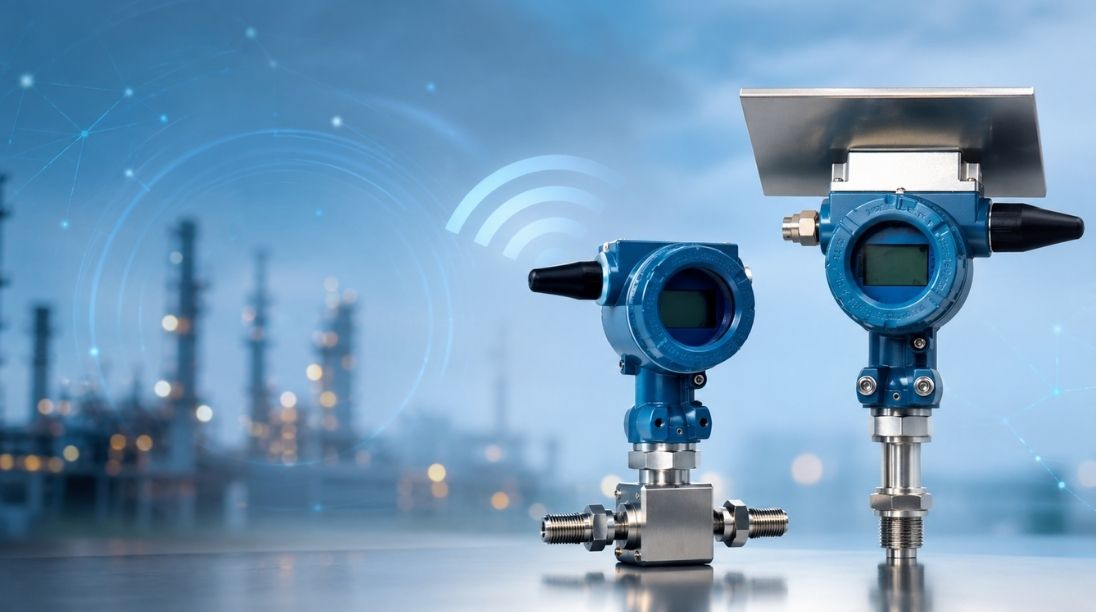
Wireless monitoring solutions have changed how industries handle level sensing by removing the need for extensive wiring. These systems use wireless nodes connected to measuring devices like ultrasonic sensors on containers. Budget-friendly installation needs minimal infrastructure changes compared to wired systems.
Remote access brings several key benefits:
Up-to-the-minute monitoring from any location using smartphones or computers
Automated alerts when liquid levels hit critical thresholds
Better maintenance planning based on actual needs instead of forecasts
Wireless networks also adapt exceptionally well. Containers can move without changing the monitoring system or disconnecting measuring devices.
Conclusion
This piece has taken you through the diverse world of level sensing technologies that drive modern industrial operations. Level sensors are vital components in many sectors, from water treatment facilities to food production and chemical processing plants.
Your specific application requirements determine the right level sensor choice. Float sensors provide simplicity and cost-effectiveness for simple applications. Radar sensors deliver superior performance in challenging environments, though they cost more. Ultrasonic sensors give excellent accuracy without material contact but struggle with foam and condensation.
Level sensing technology advances faster each day. Wireless connectivity, IoT integration, and sensor miniaturization have reshaped the scene of industrial monitoring and process management. These advances enable live data access, remote monitoring, and better energy efficiency.
Your material properties, environmental conditions, accuracy needs, and budget constraints need careful evaluation before the final choice. Note that you don’t always need the most expensive option—simpler technologies often deliver excellent results when implemented correctly.
This practical guide should help you direct the selection process confidently. The right level sensor technology you choose today will lead to optimized operations, lower maintenance costs, and enhanced safety in your facility tomorrow.
Contact us and let us give you advice.
FAQs
Q1. What are the main types of level sensors used in industry? The main types of level sensors include float sensors, optical sensors, ultrasonic sensors, radar sensors, capacitance sensors, conductivity sensors, and vibrating (tuning fork) sensors. Each type has its own advantages and is suited for different applications based on factors like accuracy, cost, and environmental conditions.
Q2. How do continuous level sensors differ from point level sensors? Continuous level sensors provide exact measurements throughout the entire range of a container, offering precise level data at any point. Point level sensors, on the other hand, function as simple on/off switches that detect when material reaches predetermined levels, ideal for preventing overflow or run-dry situations.
Q3. What factors should be considered when choosing a level sensor? Key factors to consider include the type of material being measured (liquid, solid, or slurry), tank size and shape, environmental conditions (temperature, pressure, chemical compatibility), required accuracy, and budget constraints. It’s also important to consider whether point level or continuous measurement is needed for the application.
Q4. How are level sensors evolving with modern technology? Level sensors are becoming smarter with IoT integration, allowing for real-time data access and remote monitoring. Wireless connectivity is eliminating the need for extensive wiring, while sensor miniaturization is expanding their use in various applications. These advancements are improving energy efficiency and enabling more strategic maintenance planning.
Q5. What are the advantages of non-contact level sensors? Non-contact level sensors, such as ultrasonic and radar sensors, offer several advantages. They can measure levels without touching the material, making them ideal for use with corrosive substances or in sterile environments. They also tend to require less maintenance, provide faster readings, and can operate effectively in challenging conditions like high pressure or temperature environments.