A magnetic flow meter offers something most flow measurement devices cannot: accurate readings without any moving parts or obstructions in the flow path. This transducer measures fluid flow by detecting the voltage induced across the liquid as it moves through a magnetic field. The electromagnetic flow meter, also called a magmeter, relies on Faraday’s Law of electromagnetic induction to create measurable signals proportional to fluid velocity. You need to understand how magnetic flow meters work and their working principle to select the right flow measurement solution. In this piece, I’ll walk you through what magnetic flow meters are and how they operate, which fluids they can measure, and the installation points you need to know.
What is a Magnetic Flow Meter (Magmeter)?
Simple definition and function
A magnetic flow meter, commonly called a magmeter or electromagnetic flowmeter, is a volumetric flow meter that measures the flow rate of electrically conductive liquids. The device generates a magnetic field inside the pipe. As the conductive liquid flows through it, electrodes measure a voltage that gets created. This voltage is proportional to the flow rate and provides accurate flow measurements.
The magmeter operates without depending on moving mechanical components. It measures flow velocity through electromagnetic principles as liquid circulates through a pipe. The fluid being measured must be electrically conductive for this measurement technique to work. One quarter of all flow meters sold are magnetic flow meters as of 2020, making them one of the most popular flow measurement technologies worldwide.
Key physical characteristics
The electromagnetic flow meter consists of several key components that work together. Non-magnetic material produces the flow tube and provides stability to support process pressure while protecting internal measuring parts. A liner covers the inside of the flow tube and serves as an insulation layer that protects against wear and corrosion while preventing electrical interference that could compromise measurement accuracy.
Excitation coils produce a regulated magnetic field across the pipe when powered. These coils are made from copper windings positioned around the outside of the flow tube. Electrodes are small sensors placed inside the flow tube in direct contact with the fluid and detect the generated voltage that corresponds to flow velocity. The transmitter serves as the control center and processes the voltage signal from the electrodes. It generates a readable flow rate that can be displayed or transmitted to a control system.
No moving parts advantage
The absence of moving parts gives magnetic flow meters distinct advantages over traditional mechanical flow meters. These devices experience minimal wear without mechanical components, which reduces maintenance costs substantially. The lack of obstructions eliminates pressure drop and minimizes maintenance requirements.
Magmeter measurements remain independent of fluid density, viscosity, temperature and pressure. This design makes them durable and less prone to wear and clogging. Magnetic flow meters deliver accuracy around 0.5%, though some models provide even higher accuracy of 0.3%. The devices work well in abrasive and corrosive applications and maintain their expected accuracy through extended maintenance cycles and an overall longer lifespan.
How Does Magnetic Flow Meter Work
Faraday’s Law of Electromagnetic Induction
The electromagnetic flowmeter operates on Faraday’s Law of Electromagnetic Induction, which states that a voltage is induced when a conductor moves through a magnetic field. English physicist Michael Faraday found that electric charges are induced in a conductive metal rod moved at velocity through a magnetic field and generate a voltage of a few millivolts between the rod’s ends. The conductive fluid flowing inside the measuring tube acts as the moving conductor in a magmeter.
The fundamental equation derived from Faraday’s Law expresses this relationship: V = k · B · D · v, where V represents induced voltage, k is the calibration constant, B is magnetic field strength, D is pipe diameter (distance between electrodes), and v is fluid flow velocity. Magnetic field strength and electrode distance remain constant, so the equation simplifies to show that induced voltage is directly proportional to fluid velocity.
The role of the magnetic field
Electromagnetic coils generate a magnetic field perpendicular to the direction of fluid flow and are positioned outside the flow tube. The flow tube must be non-magnetic to allow penetration of the magnetic field into the liquid. The conductive fluid moves through this magnetic field and cuts across the magnetic field lines, separating charged particles and inducing a voltage.
Modern magnetic flow meters use pulsed direct current to generate the magnetic field. The polarity reverses periodically and causes consecutive measuring voltages at the electrodes to have opposing signs. This reversal cancels out electrochemical potential differences and interference voltages that do not change direction with the magnetic field.
Electrode signal detection
Two electrodes detect the induced voltage generated as fluid flows through the magnetic field and are positioned on opposite sides of the pipe. The electrodes measure voltage signals in the millivolt range. These electrodes sense the voltage proportional to average fluid velocity and are perpendicular to the magnetic field.
Transmitter signal conversion
The sensor captures the induced voltage produced by the fluid passing through the pipe. The transmitter receives this voltage signal and converts it into a flow measurement. Flow rate equals velocity multiplied by pipe cross-sectional area, so the device calculates volumetric flow rate. The resulting measured voltage is converted into a volumetric flow signal and made accessible as standardized output signals such as 4-20 mA current output.
Conductive Fluid Requirements and Applications
Minimum conductivity levels needed
Electrical conductivity determines whether a magnetic flow meter can measure a particular fluid. Standard industrial magmeters require minimum fluid conductivity of 5 μS/cm. But conductivity requirements vary by meter size. Sizes 2.5 to 10 mm need 5 µS/cm or greater, sizes 15 to 125 mm require 1 µS/cm or greater, and sizes 150 to 400 mm need 3 µS/cm or greater. Some high-sensitivity models measure down to 1 μS/cm.
Suitable fluids (wastewater, acids, seawater)
Electromagnetic flowmeters excel at measuring water, wastewater, chemicals, slurries and other conductive liquids. Wastewater contains dissolved salts and contaminants that ensure adequate conductivity for stable measurement. The devices handle corrosive liquids such as acids and alkalis. Seawater, with conductivity around 45-55 mS/cm, improves signal strength and measurement stability.
Fluids that cannot be measured
Petroleum products, pure water, alcohols and oils cannot be measured due to insufficient conductivity. Deionized water, ultrapure water, distilled water and boiler feed water fall below minimum conductivity thresholds. Gases and steam are unsuitable as they lack the conductive properties required.
Common industrial applications
Magmeters serve water and wastewater treatment plants, chemical processing facilities, mining operations handling slurries, and pulp and paper industries. The oil and gas sector uses them for produced water, brine injection and chemical dosing.
Installation Considerations and Types
Proper grounding techniques
Proper grounding maintains accurate measurements since the electromagnetic flowmeter induction signal is weak and noise affects it. Connect the pipe to the magmeter on metal pipes without insulating coatings, then attach the grounding wire to the grounding grid. Three grounding methods exist for non-metallic pipes: grounding rings installed on flanges at both ends establish a stable reference point, grounding electrodes at the sensor’s lowest point reduce costs with precious metals like tantalum or platinum, and virtual grounding technology eliminates additional hardware by floating the measurement circuit at the liquid’s potential. The grounding point should remain far from large electrical equipment to prevent interference.
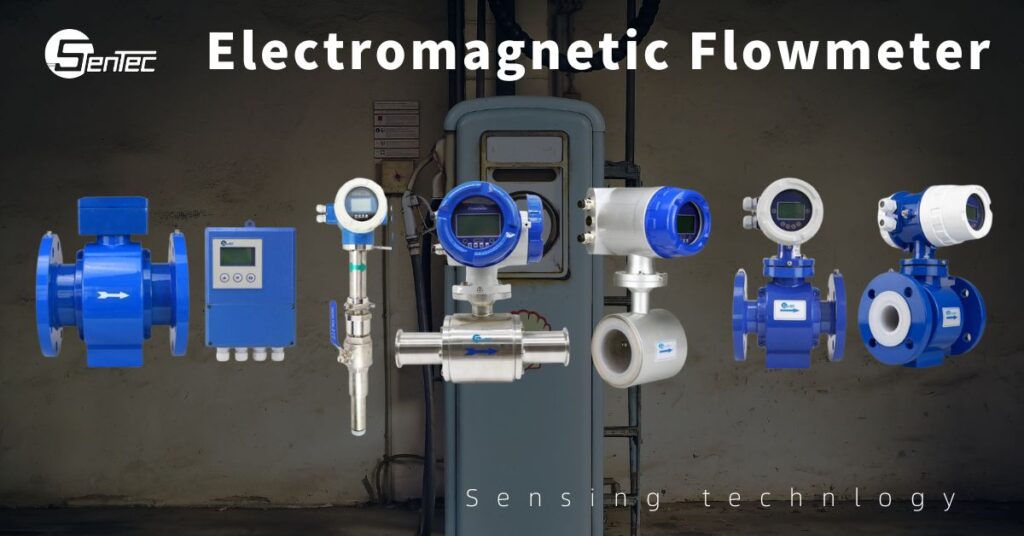
In-line vs insertion magnetic flowmeters
In-line meters measure the entire cross-sectional flow profile with accuracy as high as 0.5% of flow rate. They require minimal straight pipe runs, 5 to 10 diameters upstream and 1 to 2 downstream. Insertion meters offer lower costs for large pipes but need 15 to 25 pipe diameters upstream for optimal accuracy. Insertion styles measure only a small flow profile area. This makes them velocity-dependent and insertion length-critical.
Liner material selection
PTFE liners provide superior chemical and heat resistance. Polyurethane rubber excels in abrasion resistance for slurries. Ceramic liners deliver abrasion resistance 10 times greater than polyurethane and handle high temperatures, though concentrated alkaline solutions make them unsuitable.
Ensuring full pipe conditions
Install the sensor where flow remains fully developed, requiring 10 pipe diameters upstream and 5 downstream. Vertical installations with upward flow keep pipes full. Horizontal mounting should occur in low sections that remain filled.
Flow rate range specifications
Magnetic flow meters adjust for flow rates from 0.1 to 10 meters per second. Insertion meters handle 0.05 to 10 m/sec in pipes from 2 to 48 inches. In-line models accommodate 1 to 10 m/sec with higher accuracy.
Conclusion
Magnetic flow meters deliver accurate, low-maintenance flow measurement for conductive liquids in countless industrial applications. These devices lack moving parts and feature an obstruction-free design that provides reliability traditional flow meters cannot match. Verify that your fluid meets the minimum conductivity requirements and plan for installation before selecting a magmeter for your application. Choose the right magnetic flow meter and install it well to benefit from years of precise measurements with minimal upkeep.