Ultrasonic flow measurement cuts maintenance costs by a lot – about 25 percent more than mechanical alternatives. This makes it the best choice for industrial applications. Most facilities prioritize accuracy and operational efficiency for their flow monitoring needs. A Frost & Sullivan study reveals that non-invasive flow measurement reduces installation costs up to 30 percent compared to in-line meters.
High-frequency sound waves help ultrasonic flow meters measure flow velocity with precision. Modern meters achieve exceptional accuracy rates of ±0.5% while mechanical options only manage ±1.5%. The ultrasonic flow measurement principle uses no moving parts, so your equipment lasts longer and needs less maintenance. We’ll get into the ultrasonic flow meter’s working principle in this piece and show you why it stands out as the most reliable solution for industrial measurement needs.
Understanding Ultrasonic Flow Measurement
Ultrasonic technology measures fluid flow without touching the liquid. The process works by sending ultrasonic beams through fluid and analyzing their properties to determine flow characteristics with remarkable precision. This hands-off approach sets it apart from traditional mechanical methods that need direct fluid contact.
What is ultrasonic flow measurement?
Ultrasonic flow measurement is a volumetric flow measuring technique that uses sound waves to determine how fast fluid moves through pipes or channels. The method utilizes ultrasonic pulses (sound waves above human hearing range) that travel through pipe walls and fluid to calculate average flow velocity. These meters can measure volumetric flow accurately without touching the liquid or gas inside the pipe.
The technology shines because of its versatility. These flow meters provide precise measurements in a variety of fluids like natural gas, crude oil, and other liquids and gasses. It also maintains consistent performance whatever the changes in pressure, temperature, or fluid density, making it reliable in tough industrial environments.
Ultrasonic flow meter working principle
The ultrasonic flow meter works on two basic approaches: the transit-time differential method and the Doppler effect.
The transit-time differential method measures flow by comparing how long ultrasonic pulses take to travel with and against fluid flow. The concept is simple – like swimming, moving against the flow takes more time than moving with it. The time difference between these travels relates directly to flow velocity.
The method works this way:
Two sensors mounted on the pipe emit and receive ultrasonic pulses in sequence
At zero flow, signal times are similar
With flowing fluid, the ultrasonic waves need different times to reach the opposing sensor
This measurable transit time difference matches the flow velocity
The Doppler method uses the Doppler effect to measure flow by detecting frequency shifts in sound waves that bounce off particles or bubbles in the fluid. This method needs enough reflective elements in the fluid to return the ultrasonic signal.
How do ultrasonic flow meters work?
Ultrasonic flow meters use three main measurement technologies, each perfect for specific uses.
Transit-time flow meters send ultrasonic pulses between transducers through fluid in a pipe. The system measures the difference in transit time between pulses going downstream versus upstream. This time difference shows the fluid’s flow velocity and rate. The calculations reveal both average fluid velocity and sound speed through specific mathematical equations.
Doppler flowmeters bounce an ultrasonic beam off suspended particles or gas bubbles in the flowing stream. The frequency shift of the returned signal (Doppler shift) matches the liquid’s velocity directly. These meters work best when liquids have at least 100 parts per million (PPM) of 100 micron or larger suspended particles or bubbles.
The cross-correlation method tracks how long disturbances or patterns in the flow take to travel between two measuring points. This approach works great for very high flow velocities or flows with lots of gas bubbles or particles.
Today’s ultrasonic flowmeters are incredibly precise, with top models reaching accuracy levels up to ±0.5%. This precision makes them a great way to get data across many industrial applications where reliability matters most.
Types of Ultrasonic Flow Meters
Ultrasonic flow meters of all types excel in specific industrial applications. The right measurement solution depends on understanding these different designs and your flow monitoring needs.
Transit-time flow meters
Transit-time ultrasonic flow meters measure the time difference between upstream and downstream ultrasonic signals. These meters work on the time-of-flight principle. Ultrasonic pulses move faster with the flow direction and slower against it. The time differences relate directly to flow velocity, which helps calculate accurate flow rates.
Clean, homogeneous liquids with minimal particulates work best with these meters. They’re perfect to measure crude oil, viscous fluids, and cryogenic applications like liquid nitrogen, argon, and helium. These meters can achieve accuracy rates up to ±0.1% when temperature and density stay stable.
Transit-time flow meters offer several transducer configurations:
‘Z’ configuration: Transducers sit on opposite pipe sides, with one downstream from the other
‘V’ configuration: Both transducers stay on the same side, which works best for most installations
‘W’ configuration: Best for smaller pipes (½” to 1½”), where the signal bounces off the wall three times
These meters work great with clean liquids but might struggle with excessive air bubbles or solids.
Doppler flow meters
Doppler ultrasonic flow meters work differently. They use the Doppler effect that Christian Doppler found in 1842. These meters send ultrasonic signals into the flowing stream and measure frequency changes from moving particles or bubbles.
Doppler meters need specific minimum concentrations to work – usually 80–100 mg/L of solids larger than 75 µm or 100–200 mg/L of bubbles between 75–150 µm. This makes them ideal to measure slurries, wastewater, activated sludge, and mining flows.
Particle motion changes the ultrasonic beam’s frequency, which a second transducer picks up. The frequency change matches the flow rate linearly. Doppler flow meters typically give ±2% accuracy of the flow reading. Though less precise than transit-time meters, they remain reliable for suitable applications.
Clamp-on vs inline designs
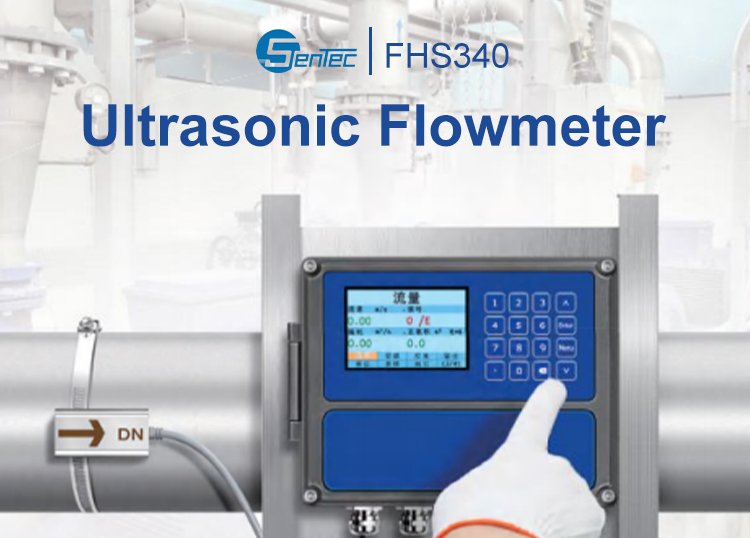
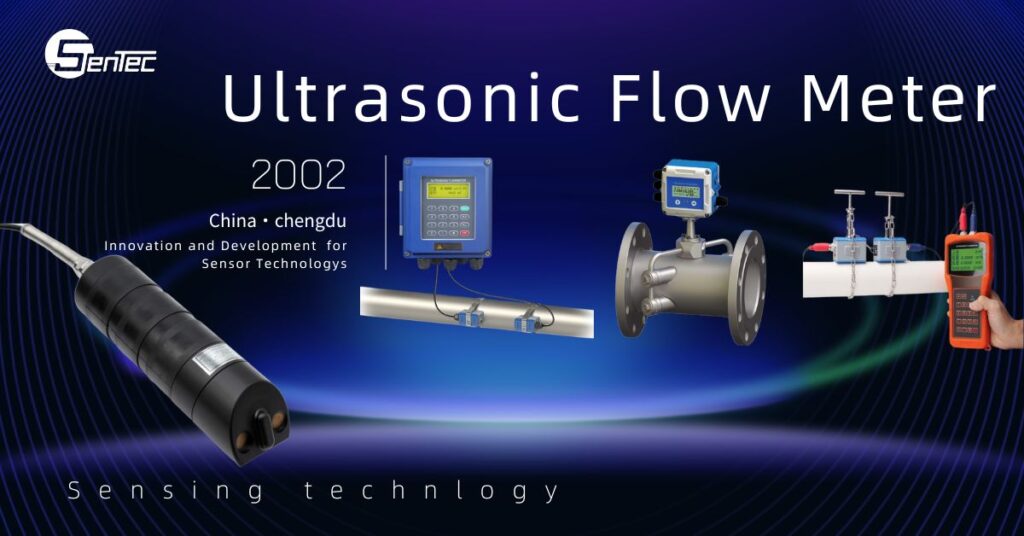
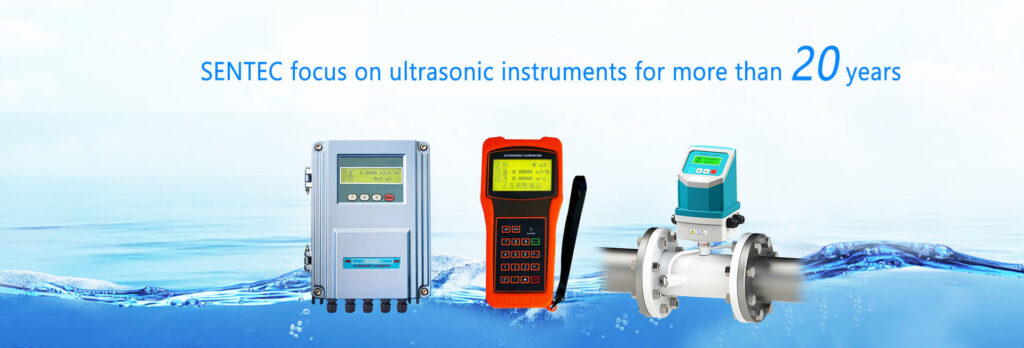
Ultrasonic flow meters come in two installation types: clamp-on (non-invasive) or inline.
Clamp-on ultrasonic flow meters attach to pipes from outside, so you don’t need to cut or interrupt the system. One person can install these meters in about 30 minutes without stopping service. Though they cost more upfront than traditional meters, they end up saving money by reducing installation and maintenance costs.
Clamp-on meters work great for:
Modernizing existing systems
Temporary measurements
Applications that must avoid contamination
Cases where pressure drop isn’t acceptable
Inline ultrasonic flow meters integrate directly into the pipeline but need pipe cutting during installation. These “spool piece” designs often measure more accurately. They become a permanent part of the piping system, offering less flexibility but sometimes more reliability at critical measurement points.
Both designs can use transit-time or Doppler technology, based on application needs and fluid characteristics. Your choice between clamp-on and inline depends on installation limits, accuracy needs, and whether you need temporary or permanent measurement.
Key Benefits for Industrial Use
Industrial facilities worldwide are turning to ultrasonic flow meters because they work better than traditional measurement technologies. These benefits go way beyond the reach and influence of simple flow measurement. They offer substantial improvements in safety, accuracy, maintenance, and system efficiency.
Non-invasive and safe operation
Ultrasonic flow measurement technology gives a safer approach through its non-invasive design. Traditional meters need pipe cuts, but ultrasonic devices clamp onto the exterior without disrupting the system. This non-intrusive method removes risks of leaks or spills—a vital advantage when handling hazardous materials. A report from Pipeline & Gas Journal found non-invasive technology reduces leak risks by 30%.
The safety benefits show up in environmental adaptability too. High-quality ultrasonic flow meters can handle extreme temperatures from -190°C to 600°C with specialized fixtures. This makes them perfect for harsh industrial environments where traditional meters might fail.
High accuracy and repeatability
Ultrasonic flow meters are much more precise than mechanical alternatives. Modern devices can achieve accuracy rates of ±0.5% to ±1% of reading under optimal conditions. Some systems can even reach ±0.1% accuracy for actual flow rates.
The exceptional repeatability—typically within ±0.05% to ±0.2%—is just as important. This consistency will give reliable data for critical process control and regulatory compliance. The cross-correlation method improves accuracy, especially when conditions are challenging with high flow velocities or substantial gas bubble content.
Minimal maintenance requirements
From an operational view, ultrasonic flow meters need nowhere near as much maintenance. They have no moving parts, so they experience almost no wear and tear. Flow Control Network research shows these meters cut maintenance costs by approximately 25% compared to mechanical alternatives.
External mounting position creates this maintenance advantage and prevents contact with potentially corrosive or abrasive fluids. You won’t need frequent cleaning, adjustment, or part replacement.
No pressure loss or flow obstruction
These meters create zero pressure drop, which is a huge operational benefit. System efficiency stays high because no components block the flow path. This advantage helps especially when you have steam measurement applications, where pressure losses directly affect power and heat delivery.
Clear flow paths mean no pressure-related energy losses, which reduces steam generation costs. These meters maintain accuracy across varying pressure conditions and minimize the long-term cost of ownership. System performance stays at its peak.
Applications Across Industries
Ultrasonic flow measurement technology proves its worth in many industries. Each sector taps into specific benefits of this technology to monitor their fluid systems.
Water and wastewater treatment
Water management facilities rely on ultrasonic flow meters to monitor raw water intake, clean water delivery, and effluent discharge. These meters prevent fouling because they don’t need direct contact – a vital advantage for wastewater applications. The technology helps detect leaks and balance flow in city water systems to save resources. Most facilities choose ultrasonic technology over electromagnetic options for large pipes above DN800. The data these systems generate helps calculate plant capacity and guides expansion plans.
Oil and gas pipelines
The oil and gas industry depends on ultrasonic flow meters to measure custody transfers of crude oil, refined products, and natural gas. These devices deliver accurate measurements even in high-pressure, high-temperature conditions. The non-invasive design eliminates potential leak points, which makes them much safer for volatile hydrocarbons. These systems detect pipeline impurities and leaks to maintain product quality and operational safety.
Chemical and pharmaceutical processes
Chemical processors use ultrasonic flow meters because they resist damage from harsh substances like acids, solvents, and sodium hypochlorite. Clamp-on models let operators monitor flow precisely without exposure to dangerous chemicals in dosing, mixing, and dilution systems. Pharmaceutical companies rely on these meters for batch processing and liquid ingredient dispensing. The technology also helps optimize Clean-in-Place (CIP) systems by monitoring cleaning agent use.
Food and beverage manufacturing
Food producers choose ultrasonic technology to measure liquid food product flow hygienically. The systems work with Clean-in-Place operations without stopping production – a big advantage in continuous manufacturing. Dairy facilities use clamp-on meters to track milk flow during truck loading. This improves accuracy and eliminates contamination risks. Beverage makers also benefit from these meters’ precision in ingredient batching and quality control.
Installation and Operational Considerations
The right installation and operational practices will give a soaring win in ultrasonic flow measurement systems. You can maximize accuracy and extend equipment life by becoming skilled at these essential aspects.
Pipe condition and material compatibility
The right pipe selection is vital to get the best performance from ultrasonic flow meters. Experience shows that you need adequate straight pipe runs—typically 10 diameters upstream and 5 downstream from any fittings—this will give a stable flow profile before measurement. The pipes need to be full of liquid to avoid wrong readings from air pockets.
Clean the pipe surface well and apply coupling gel before installing transducers to create proper acoustic connection. You’ll get the best results by installing sensors horizontally on the sides instead of the top where air bubbles collect.
Environmental factors affecting performance
The environment can affect ultrasonic flow meter accuracy in several ways. You need to assess temperature changes, vibration levels, and electromagnetic interference while planning the installation.
Place meters at least 30 pipe diameters away from pumps to avoid measurement errors. On top of that, it’s best to keep meters away from high-voltage power lines or high-traffic areas that can cause noticeable interference.
Calibration and validation best practices
Ultrasonic flow meters keep stable calibration, but regular checks help maintain accuracy. Here are the best practices:
Check performance regularly with portable reference devices
Keep records of adjustments to meet regulatory requirements
Calibrate in controlled settings that match real operating conditions
The type of application determines how often you need to calibrate—custody transfer meters need more frequent calibration than process control meters.
Conclusion
Ultrasonic flow meters offer the best solution for industrial flow measurement needs. This piece shows how these devices achieve exceptional accuracy rates of ±0.5% while mechanical alternatives only manage ±1.5%. The non-invasive design keeps the meters away from corrosive fluids and cuts maintenance costs by about 25%.
Each measurement type works best for specific needs. Transit-time meters work great with clean liquids. Doppler technology handles slurries and wastewater full of particles better. This flexibility makes ultrasonic flow measurement valuable in many industries, from water treatment to pharmaceutical manufacturing.
These systems’ remarkable reliability comes from having no moving parts. The flow path stays clear of obstructions, so ultrasonic meters stop pressure drops that would cut system efficiency and raise energy costs. The clamp-on installation options let teams deploy quickly without stopping production or creating safety risks.
Organizations looking for reliable flow monitoring will find that ultrasonic technology meets their core needs. The meters’ performance stays consistent when teams pay attention to pipe conditions and environmental factors, with regular calibration through their long lifespan. Accuracy, reliability, and lower maintenance costs make ultrasonic flow measurement without doubt your best pick for industrial applications where precision counts.