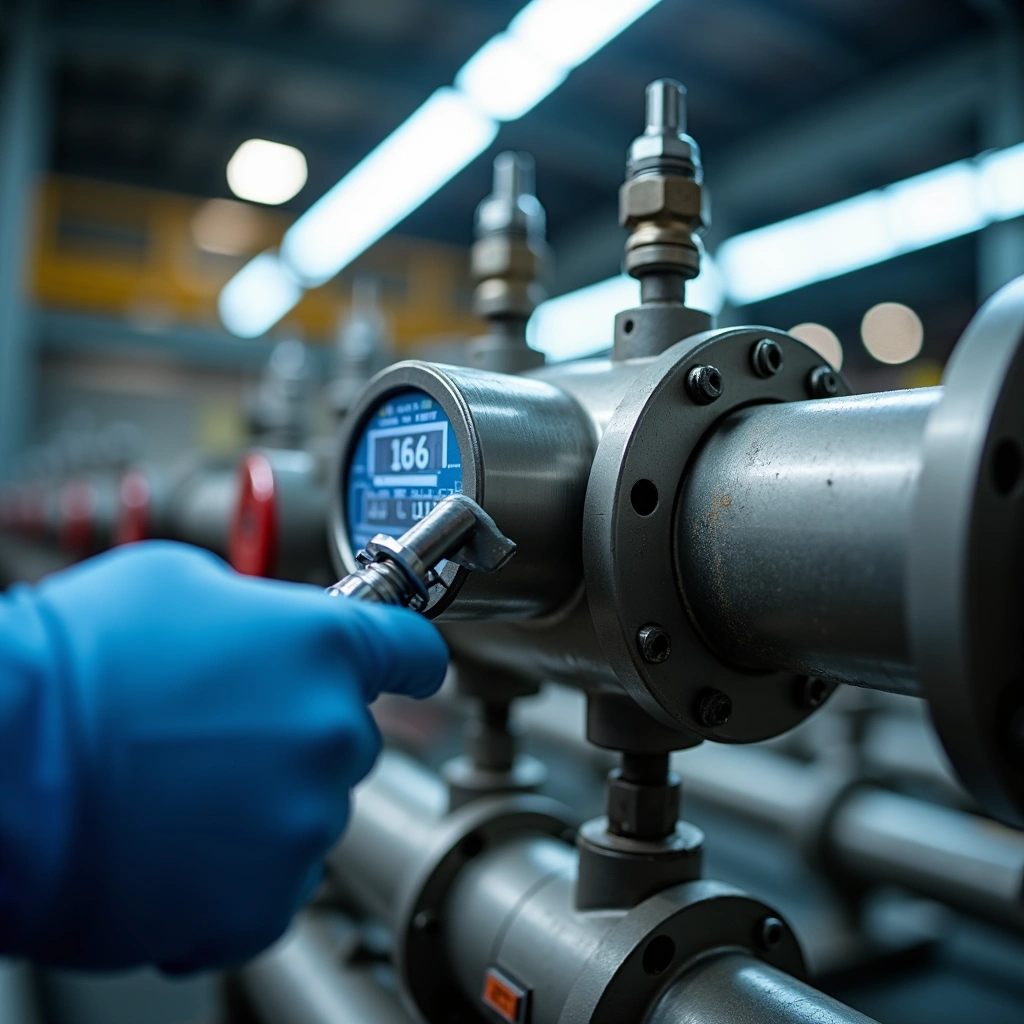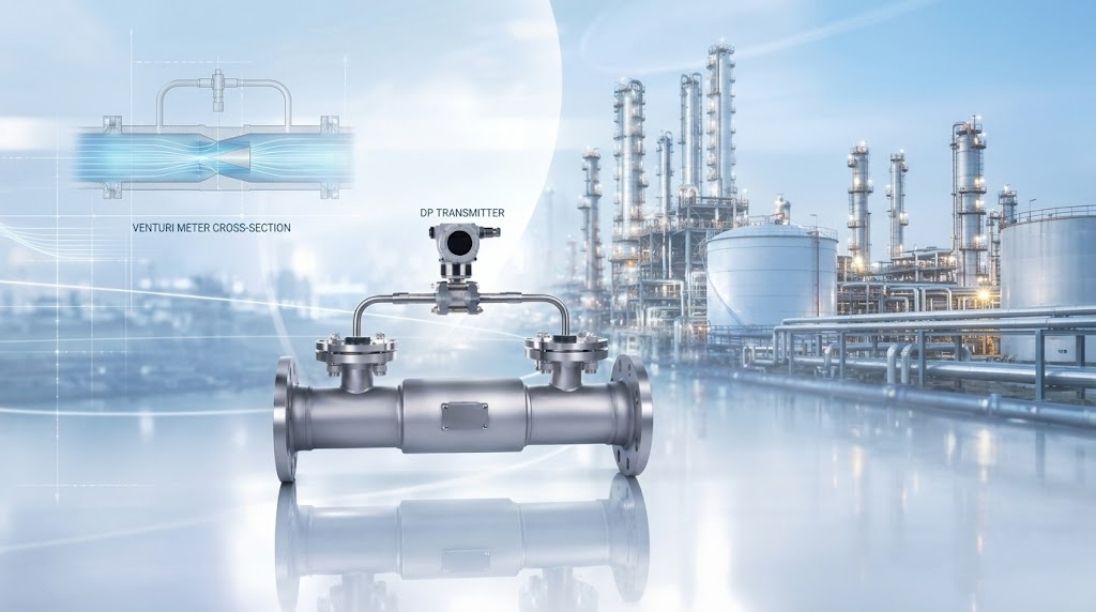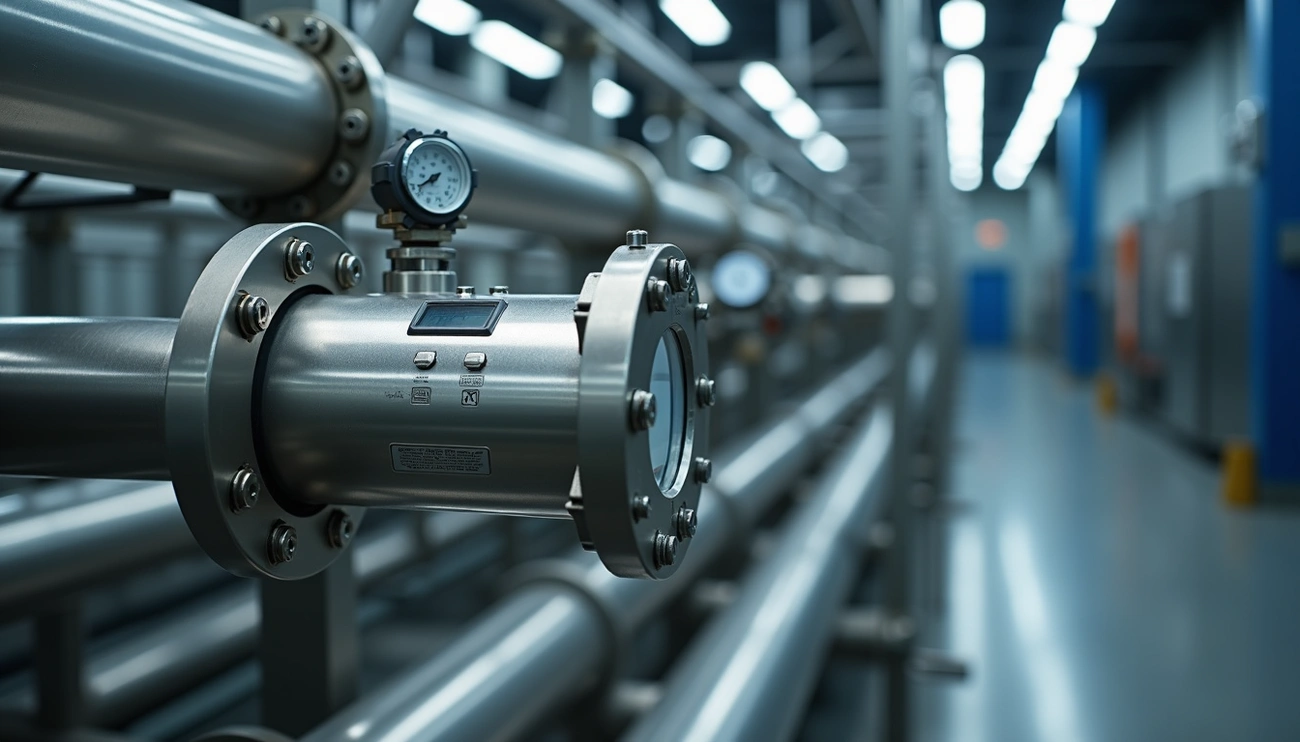
Differential pressure flow meters dominate the liquid flow measurement landscape. These devices measure more than 50% of all liquid flow applications today. Flow meters serve as vital tools in industries of all types. They optimize operations in industrial process control, medical diagnostics, and energy management. But choosing the wrong type can waste money and hurt performance.
The best decisions come from a solid grasp of flow meter working principles. Each type uses unique mechanisms to measure different substances like water, oil, fuel, air, and steam. The right flow meter choice can optimize efficiency and safety while reducing costs. This piece breaks down various flow meter technologies. You’ll learn how each type works and find the perfect match for your needs.
Understanding Flow Meters and How They Work
Flow measurement through pipes and systems ranks as one of the most important parameters in industrial instrumentation. Measuring flow comes with unique challenges that need specialized devices to capture data accurately and reliably.
What is a flow meter?
At its core, a flow meter is a device that measures the rate or quantity of a fluid (liquid or gas) moving through a system. Industry professionals use different names like flow indicators, liquid meters, or flow rate sensors based on their specific context. These instruments improve the precision, accuracy, and detail of fluid measurements. They provide high efficiency and durability while needing minimal maintenance.
A flow meter’s main goal remains simple: it determines how much material passes through it in a specific timeframe. These devices measure either volume (gallons per minute or liters per second) or mass (kilograms per hour or pounds per minute), based on what the application needs.
Why flow measurement matters in industry
Flow measurement serves as the life-blood of industrial operations. Industries that deal with bulk liquid transfers maybe consider this the most important measurement parameter. Precise flow measurement affects:
Process control and efficiency optimization
Accurate batching and dosing operations
Consistent product quality maintenance
Prevention of process downtime and waste
Overall profitability improvements
Rate meters become especially important with control systems because their performance depends on accurate and repeatable basic flow measurements. Bulk meters prove more useful for stock transfer and costing applications.
Poor flow measurements can lead to serious problems. Crops might flood from excessive flow or die from insufficient water in agricultural irrigation. Equipment in factories and data centers could overheat without proper flow measurements in cooling systems, which can get pricey to fix.
How does a flow meter work?
Different flow meters use various physical principles based on their type and purpose. Most process industries rely on a simple formula: flow rate equals area multiplied by velocity when the pipe’s cross-sectional area stays constant.
Flow-measuring systems come in four main categories:
Inferential methods based on differential pressure – Using pitot tubes, weirs, or orifice plates that create pressure differences proportional to flow
Inferential methods based on mechanical or electromagnetic principles – Including turbine meters and electromagnetic flow meters
Positive displacement methods – Employing vane or piston-type meters that capture discrete fluid volumes
Mass flow meters – Directly measuring the mass of fluid rather than its volume
Many variables determine the right flow meter type. These include fluid properties (viscosity, density, temperature), solids or particulates present, accuracy needs, and industry-specific standards. Coriolis meters offer exceptional accuracy within ±0.2–0.3% by measuring mass flow through vibrating tubes that deform as fluid passes through them.
Flow meters typically combine a primary element that interacts with the flowing medium and a secondary element that converts measurements into usable output signals. These signals can be analog (like 4-20mA) or digital, depending on what the system needs.
8 Common Flow Meter Types Explained

The selection of a flow measurement technology depends on how different flow meters work. Each design brings specific advantages based on the application and fluid characteristics.
Electromagnetic Flow Meters
Electromagnetic flow meters work on the principle of Faraday’s Law of electromagnetic induction. A voltage forms when conductive fluid moves through a magnetic field created by the meter’s coils. This voltage matches the flow velocity. These meters work best with water-based fluids and slurries because they don’t block flow. They need almost no maintenance due to their lack of moving parts and give accurate readings within ±0.5% of flow rate. However, they can’t measure non-conductive liquids like petroleum products.
Thermal Mass Flow Meters
Thermal mass flow meters measure gas mass flow by tracking heat transfer. The setup includes two temperature sensors with an electric heater between them. The gas flow cools the heated sensor based on its mass flow rate. These devices shine at measuring low gas flows—under 25 ft. per minute—which other meters can’t detect. Chemical processing and semiconductor industries value them because direct mass measurement removes conversion errors.
Vortex Flow Meters
Vortex meters use the von Kármán effect where fluid creates alternating vortices as it passes a bluff body. The flow velocity matches these vortices’ frequency. These meters are reliable and easy to install since they have no moving parts. They handle high-pressure conditions well and excel at steam measurement, which makes them perfect for industrial monitoring.
Turbine Flow Meters
Turbine flow meters use a rotor with angled blades that turn as fluid passes. The flow velocity matches the rotation speed. Magnetic pickoff sensors generate pulse outputs, giving accuracy between 0.5% to 1.5%. Clean, low-viscosity fluids work best with these meters, though bearing wear can be an issue. The petroleum, chemical, and water industries use them when precision matters most.
Ultrasonic Flow Meters
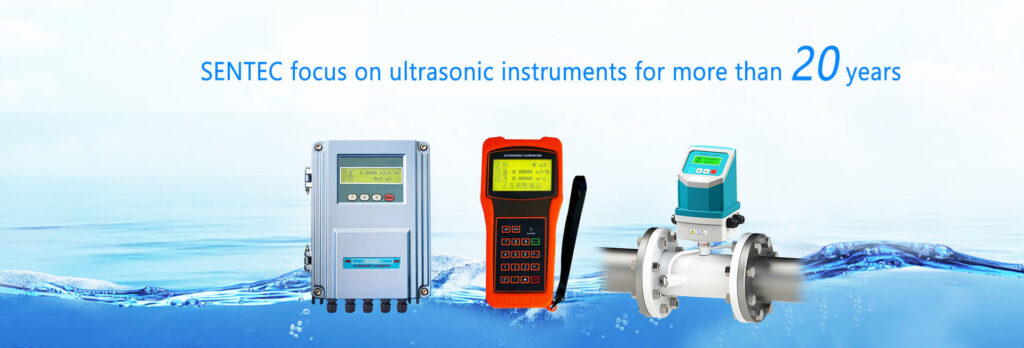
Sound waves help ultrasonic flow meters measure fluid velocity. Transit-time models look at time differences between ultrasonic pulses moving with and against flow. Doppler models track frequency changes from particle reflections in the fluid. Both types measure without touching the fluid, making them great for corrosive materials and large pipes where other meters would cost too much to install.
Rotameters (Variable Area Flow Meters)

A tapered tube with a moving float forms the basic rotameter design. The float rises with increased flow until gravity balances the flow force. These meters show flow levels without power and are affordable. While not as exact as electronic options, they work well for basic gas and liquid measurement, especially at low flow rates or extreme pressures.
Oval Gear Flow Meters
Oval gear meters use two oval-shaped gears that spin as fluid moves through. Each turn moves four similar volumes of liquid. These meters give precise readings for viscous fluids—oils, syrups, and chemicals—regardless of temperature or viscosity changes. They excel at batching and fuel distribution thanks to their high turndown rates and small volume measurement capability.
Coriolis Mass Flow Meters
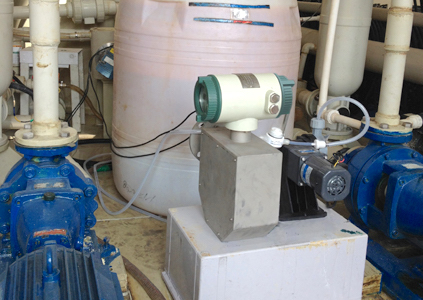
Coriolis meters use vibrating tubes to measure mass flow directly. Fluid moving through these tubes creates a twist that matches the mass flow. They achieve remarkable accuracy (±0.1%) while measuring density, temperature, and viscosity simultaneously. Though they cost more upfront, their multiple measurement abilities and low maintenance needs provide great value in oil, gas, and food processing industries.
Working Principles Behind Each Flow Meter Type
The physics behind flow meter technologies helps you pick the right device for your needs. Each meter type works on unique scientific principles that make it suitable for specific fluids and conditions.
Magnetic induction in electromagnetic meters
Electromagnetic flow meters work on Faraday’s Law of electromagnetic induction. A magnetic field from the meter’s coils interacts with conductive fluid. The charged particles create a voltage that matches the flow velocity. Electrodes detect this voltage and turn it into flow rate readings. Modern magnetic flowmeters switch the magnetic field direction back and forth to avoid electrochemical interference.
Heat transfer in thermal mass meters
Thermal mass flow meters measure gas flow through heat transfer. A heated sensor element cools down as gas moves past it. The power needed to keep a steady temperature difference between sensor and fluid matches the mass flow rate. The relationship between flow and heat transfer follows King’s equation, which factors in fluid properties.
Vortex shedding in vortex meters
Vortex meters make use of the von Kármán effect. Fluid flowing around a bluff body creates alternating vortices downstream. These vortices match the flow velocity in frequency. Pressure sensors pick up oscillations from these vortices and create matching electrical pulses. The space between vortices stays constant and only depends on the obstruction size.
Rotational speed in turbine meters
Turbine flow meters use an angled rotor that spins in the flow path. Fluid moves parallel to the axle and turns the turbine at speeds matching the flow velocity. Electronic sensors – usually magnetic pickups or Hall Effect sensors – detect each blade as it passes. These sensors create pulses that directly correspond to flow rate.
Ultrasound time/doppler shift in ultrasonic meters
Ultrasonic meters work on two different principles. Transit-time meters look at how long sound waves take to travel upstream versus downstream, which changes with flow velocity. Doppler meters track frequency changes in sound waves that bounce off fluid particles. These changes match the flow velocity.
Buoyancy and gravity in rotameters
Rotameters balance three forces: buoyancy, flow resistance, and gravity. Fluid moves through a tapered tube and lifts a float until it reaches balance. The float’s position shows flow rate through the tube’s changing width from bottom to top. The float’s design and tube’s taper play vital roles in measurement accuracy.
Gear displacement in oval gear meters
Oval gear meters serve as positive displacement devices. Two oval gears mesh and turn inside a shaped chamber as liquid flows. Each turn moves an exact volume from entry to exit. The space between gears and chamber walls creates sealed pockets that ensure accurate measurements.
Coriolis effect in mass flow meters
Coriolis meters feature tubes that twist with fluid flow. The Coriolis force – the same force that shapes Earth’s weather patterns – causes this twisting. Sensors measure how vibrations change phase at different tube points, which matches the mass flow rate. The tube’s vibration frequency also tells us the fluid’s density.
Pros, Cons, and Best Use Cases
Your choice of flow meter technology depends on how well it matches your fluid properties and operational needs. Success comes from finding the right meter for your specific application.
Which meters are best for clean vs dirty fluids?
Meters with internal moving parts work best with clean fluids. Turbine flow meters give you high accuracy (0.5-1.5%) but need clean, low-viscosity fluids to avoid bearing wear. Similarly, positive displacement meters shine with clean fluids but wear down when particles are present.
Electromagnetic flow meters are the top choice for dirty fluids or slurries because they have no obstructions. These meters handle conductive dirty liquids, slurries, and corrosive substances well since they have no moving parts that could clog or wear. Ultrasonic meters also work great with particle-laden fluids. Doppler models actually need suspended particles to work properly.
Which types work with gasses vs liquids?
Some flow meters can’t handle both gasses and liquids well. Thermal mass flow meters excel at gas applications and work great with air, natural gas, and biogas. These meters perform well at low flow rates—even below 25 ft/minute—where other options fall short.
On the flip side, electromagnetic meters only work with conductive liquids (>5μS/cm conductivity) and can’t measure gasses or oils. Coriolis meters are versatile and measure both liquids and gasses with exceptional accuracy (±0.1%). Vortex meters handle it all – gasses, liquids, and even saturated steam.
Cost and maintenance comparison
The original investment varies widely among flow meter types. Coriolis meters cost more but give you unmatched accuracy and multiple measurements. Differential pressure devices offer affordable options for simple applications.
Maintenance costs add up over time. Electromagnetic meters need little upkeep since they have no moving parts. Turbine meters need regular maintenance because of bearing wear. Good installation and filtration help meters last longer. Filtering out particles and air bubbles saves money on maintenance.
Accuracy and installation complexity
Your accuracy needs should guide your technology choice. Coriolis meters give exceptional precision (±0.1-0.5%) at a higher price. Electromagnetic meters provide great accuracy (±0.2-2%) for conductive liquids.
Each technology has its own installation challenges. In-line meters need pipe cutting and system shutdown for service. You can install insertion-style meters under pressure through ball valves. Most flow meters need specific straight pipe runs. Electromagnetic meters typically need 3-5 diameters upstream and 0-3 diameters downstream.
How to Choose the Right Flow Meter for Your Needs
Your application’s specific requirements play a vital role in choosing the right flow meter. Let’s get into the key factors that should guide your decision.
Match meter type to fluid properties
Fluid characteristics determine which flow meter works best. Electromagnetic flow meters deliver excellent results for conductive liquids with conductivity greater than 10 micro-Siemens-per-centimeter. Remember that oils, hydrocarbons, and most organic solutions cannot be measured with magnetic meters due to insufficient conductivity. Dirty fluids or slurries need meters without moving parts to prevent clogging and wear. Electromagnetic or ultrasonic meters with obstruction-free paths are your best choice.
Consider flow range and pipe size
Your application’s minimum and maximum flow rates need careful assessment. The 20-80% rule helps optimize meter performance – pick a meter where typical flow stays between 20% and maximum capacity. A flow meter’s turndown ratio affects its rangeability directly. Proper sizing depends significantly on pipe diameter. Undersized meters can get damaged while oversized ones show poor accuracy at low flows.
Evaluate installation environment
Accurate readings from flow meters depend on specific straight pipe runs upstream and downstream. Your installation site must accommodate these needs. Some meters need horizontal installation with rotors in specific planes. Others work better in vertical installations with upward flow.
Think about signal output and integration
Local or remote measurement displays serve different purposes. Distances under 100 meters work well with 4-20mA current signals. Digital signals (485 communication) prove more effective for longer distances. Your control systems’ integration requirements and communication protocols (HART, Fieldbus, Modbus) should match your infrastructure.
OEM/ODM customization options
Manufacturers provide customization services for unique applications. These range from adapting existing products to creating completely custom solutions. Accuracy levels, electrode materials, liners, output types, display interfaces, and housing configurations can all be customized.
Need Help Choosing? Talk to Sentec
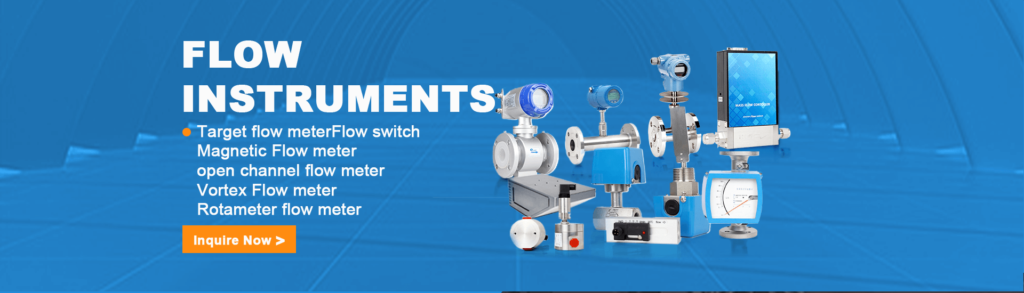
At Sentec, we specialize in providing tailored flow measurement solutions for every industry. Whether you need magnetic, ultrasonic, turbine, or variable area flow meters, our engineering team is ready to help you choose the best fit — or customize one for your unique needs.
👉 Explore our flow meter range or contact us directly for expert assistance.
Conclusion
The right flow meter choice ends up determining operational efficiency, measurement accuracy, and affordable long-term operations across industries. This piece explores eight different flow meter technologies that offer unique advantages for specific applications. Electromagnetic meters work best with conductive slurries. Thermal mass meters give unmatched sensitivity for gas measurement at very low flow rates.
You need a full picture of your fluid properties, required flow ranges, and installation environment constraints before selecting a meter. The right meter technology prevents expensive mistakes and gives reliable performance throughout the system’s lifecycle.
Maintenance needs substantially affect the total cost of ownership. Meters without moving parts like electromagnetic and ultrasonic models need minimal upkeep. Turbine meters require regular servicing to stay accurate. These factors matter a lot when you calculate long-term operational costs.
Your accuracy needs should shape the decision-making process. Coriolis meters deliver exceptional precision but come at premium prices. Simple technologies like rotameters offer affordable solutions for basic applications. Finding the right balance between performance needs and budget limits is a vital step in the selection experience.
Without doubt, proper installation shapes meter performance. Most technologies need specific straight pipe runs upstream and downstream. The right orientation gives optimal results. Not meeting these requirements creates measurement errors that add up over time.
The right flow meter does more than just measure—it’s a vital component in process control, efficiency optimization, and quality assurance. Scientific principles rather than original cost should guide your choice to get the best long-term value for your application.